Commercial drywall in Greenville for contractors and property managers

Crews phased around the other trades, rated assemblies documented as they are built, and invoicing by stage rather than one number at the end.

Board scheduled against your critical path, not ours

You hand a building over on the date you gave your own client, with the rated walls signed off first time.

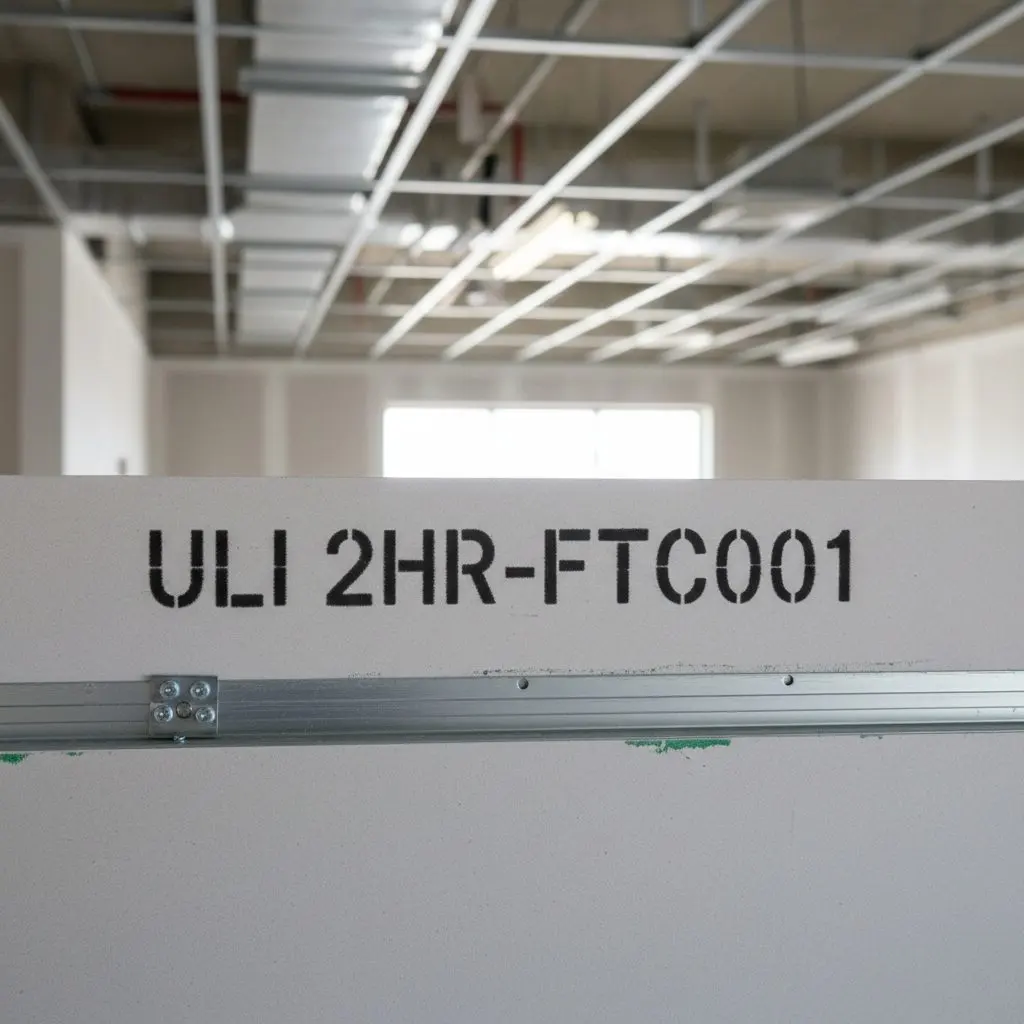
One close, square view of a fire rated wall stencilled above a ceiling grid line, showing the design number, the top of the hung partition and the track

Greenville Drywall Elite is a drywall subcontractor working across Greenville and the Upstate, fully insured in South Carolina, running four crews since 2013. Two of them are on commercial and multi-family work most weeks, and the schedule is committed three to four weeks out.

Metal stud partitions, board and finish on office buildouts, retail units, medical suites and multi-family blocks, plus rated assemblies where drawings call for them. The work itself is on the installation and ceilings pages. What changes here is how it runs. Board is scheduled against your critical path rather than ours, and every rated wall is photographed before it closes, so the inspector sees the assembly.

How small a commercial job is worth quoting? A property manager with one water damaged suite ceiling to put back gets a crew, and so does a general contractor hanging a hundred and twenty unit apartment building floor by floor.

Send the drawings over, or ask for a takeoff at (864) 555-0119. You go from chasing a sub for a start date every Friday afternoon to crossing drywall off the list and leaving it crossed off!

Phasing, documentation and how the invoice arrives

What you are buying here is a schedule that holds, not just board on studs.

A homeowner wants to know how much dust there will be. You want to know whether the hanging crew will hold a date the framer already blew, whether the rated walls will be documented well enough to pass, and whether the invoice will arrive in a shape your accounts department can process against a schedule of values.

Those are the questions this page answers. We work to a schedule rather than to a good week, we phase around the mechanical and electrical trades instead of waiting for them to finish, and we bill by completed stage.

On a fast track job the drying days are the one thing that will not compress, and you hear that at tender rather than in the week it bites.

  • Phased to your schedule, not one continuous run
  • Crews work around mechanical, electrical and sprinkler
  • Rated assemblies photographed before they are closed
  • Invoiced by stage against a schedule of values
  • Nights and weekends where a tenant is still trading
  • One named foreman on the job for its whole run
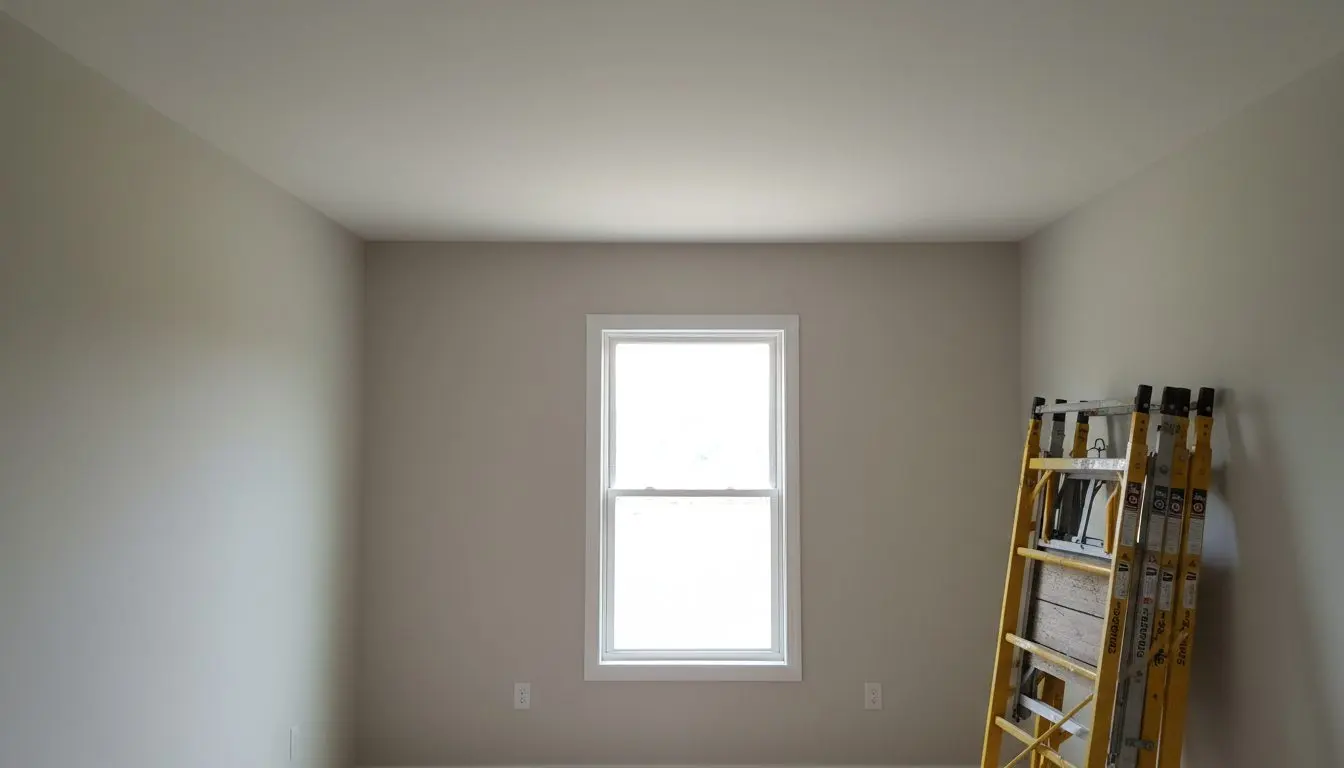
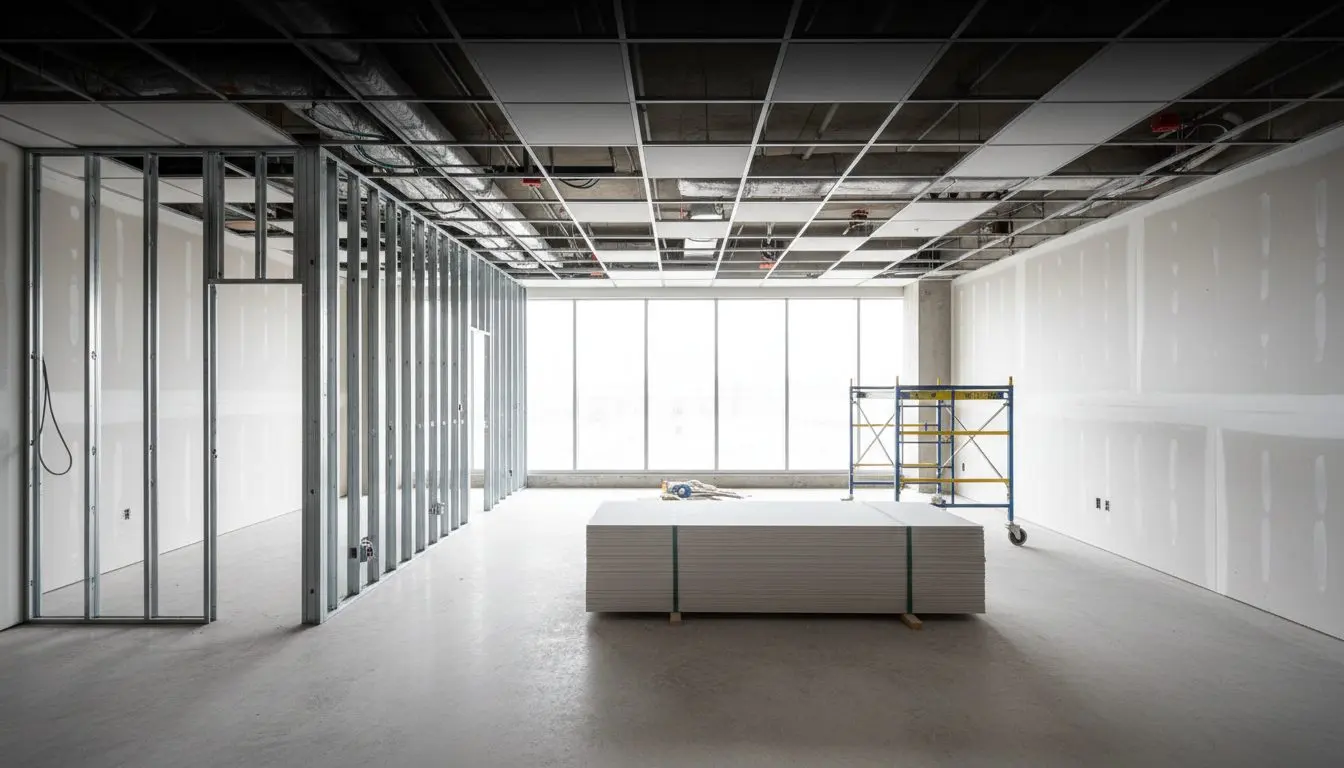
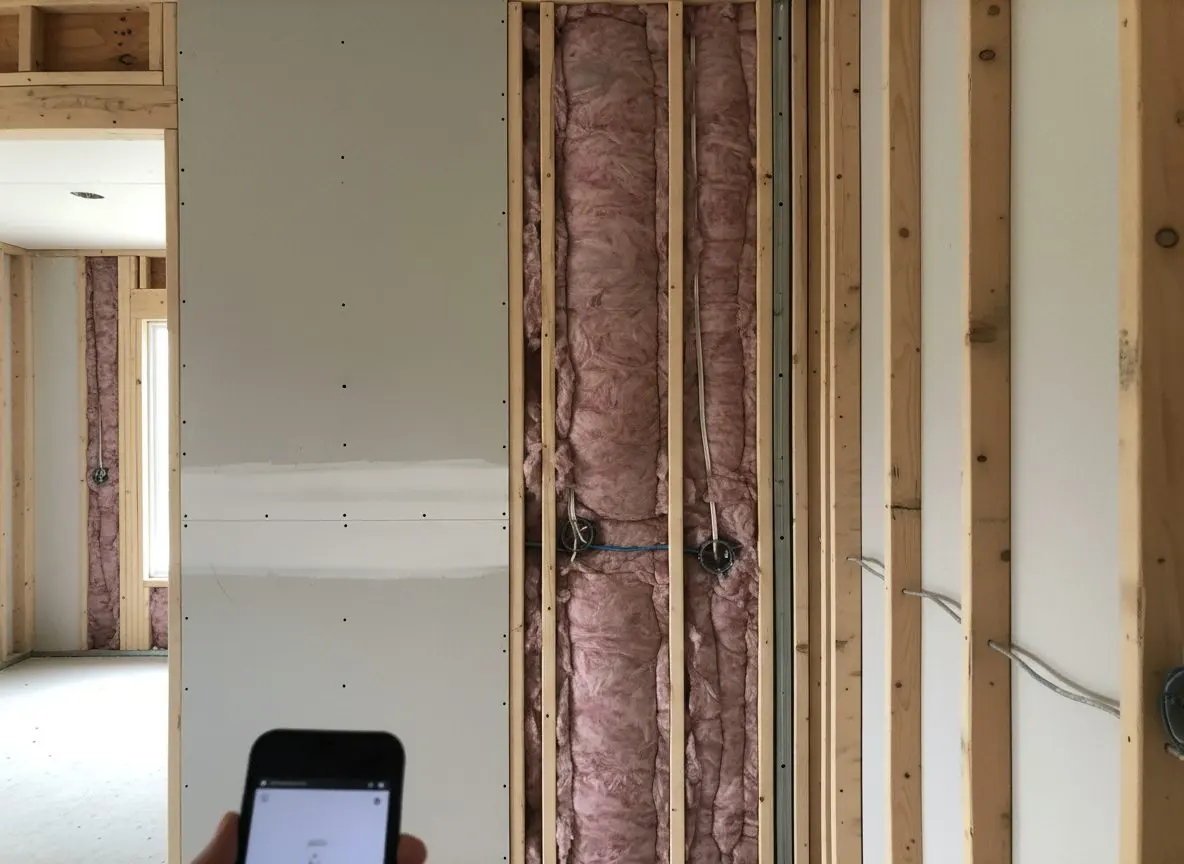
A partition wall open on one side before the second layer of board goes on
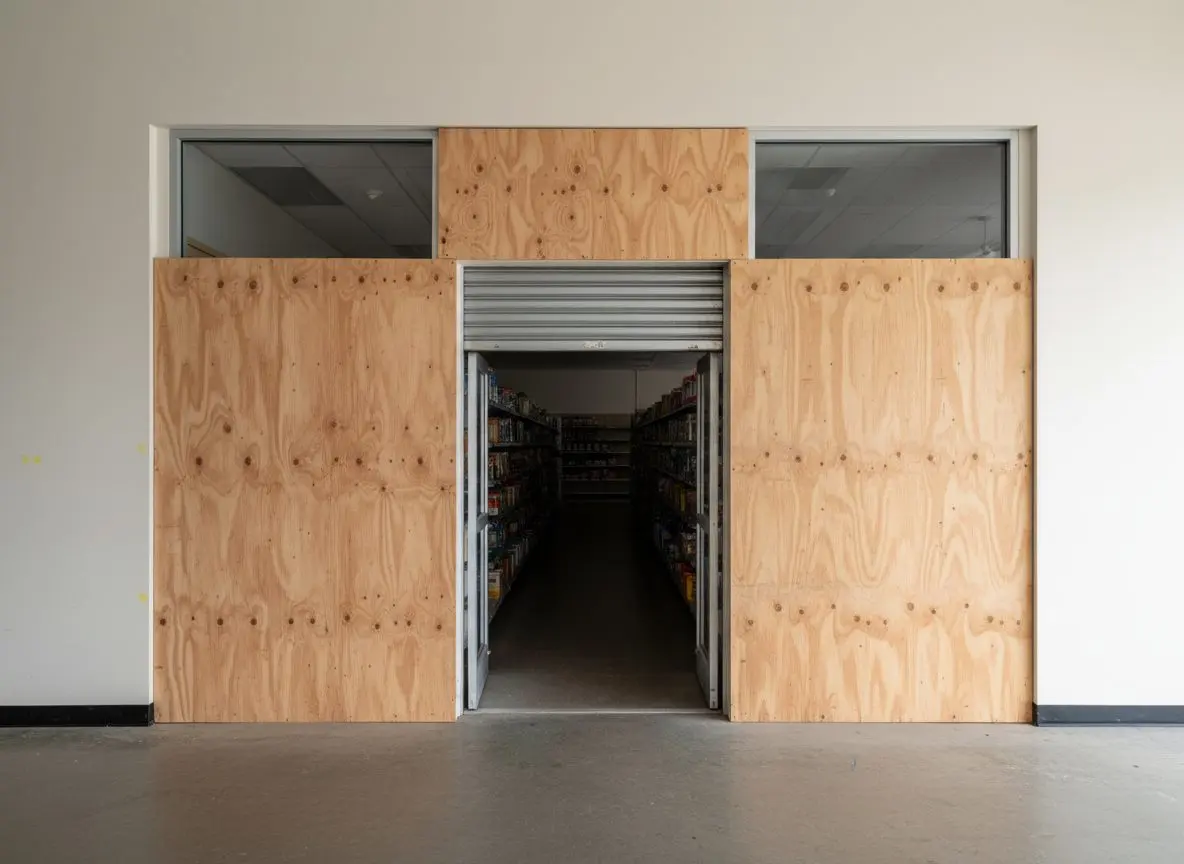
A retail unit hung after closing hours, the shopfront lights off and the stocked aisle beyond the barrier waiting for the morning

Services

The scope you would rather not self-perform

Commercial Residential
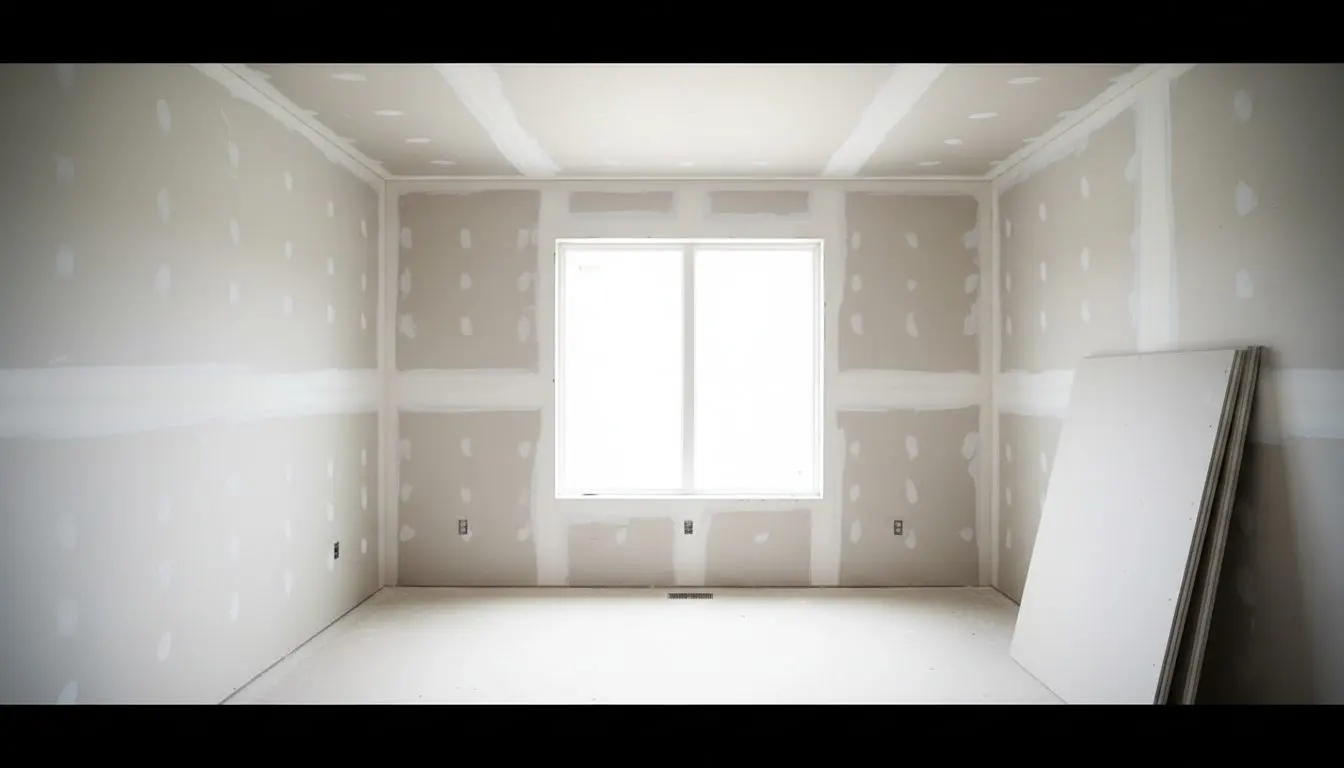
  • A bedroom in an addition with the board just hung and the first coat of compound on the joints, one wall still showing screw lines

    Drywall Installation

    For anybody who has framing standing and nothing on it yet. Builders come here with a spec house and a closing date, and homeowners come here with an attic, a garage or an addition that has reached the point where it needs walls. What people pick it for is the part before the board goes up, which is the string line across the studs and an honest answer about whether the lumber is dry enough to cover.

    Learn more about Drywall Installation
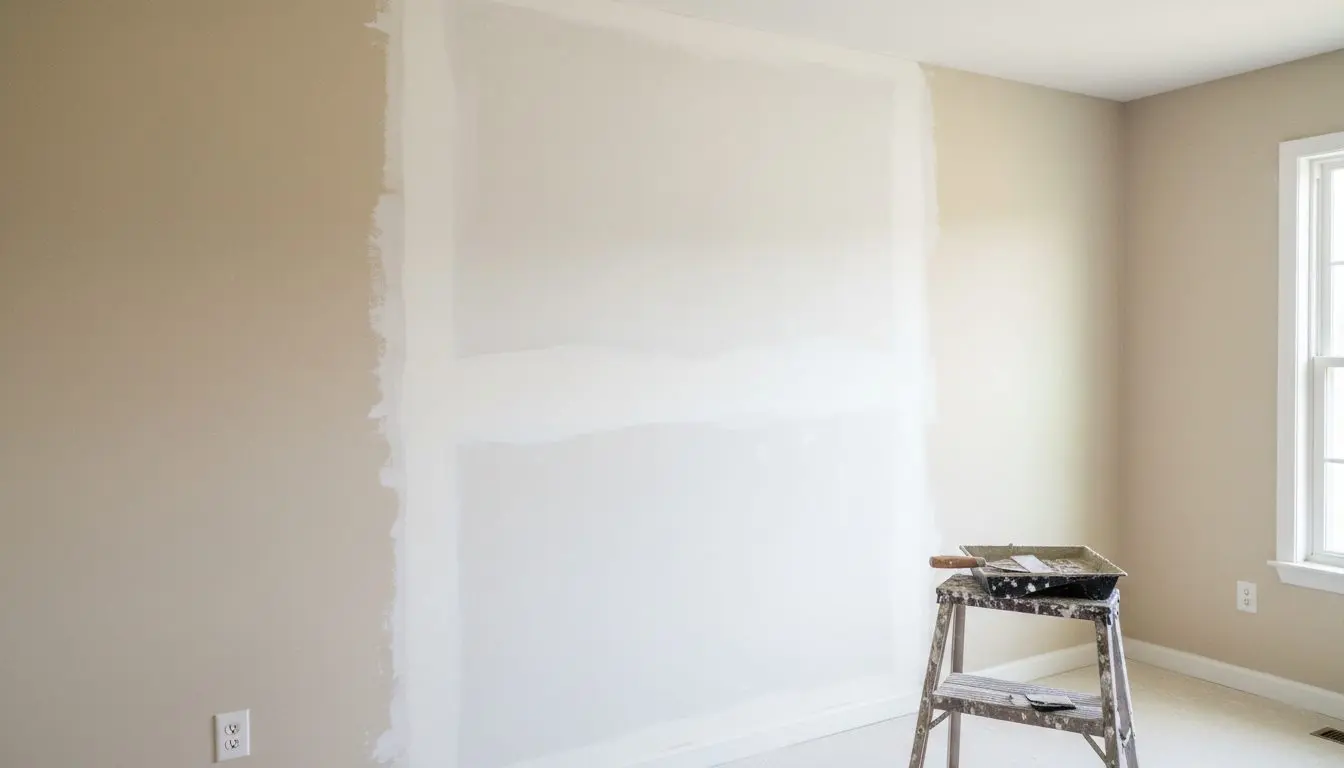
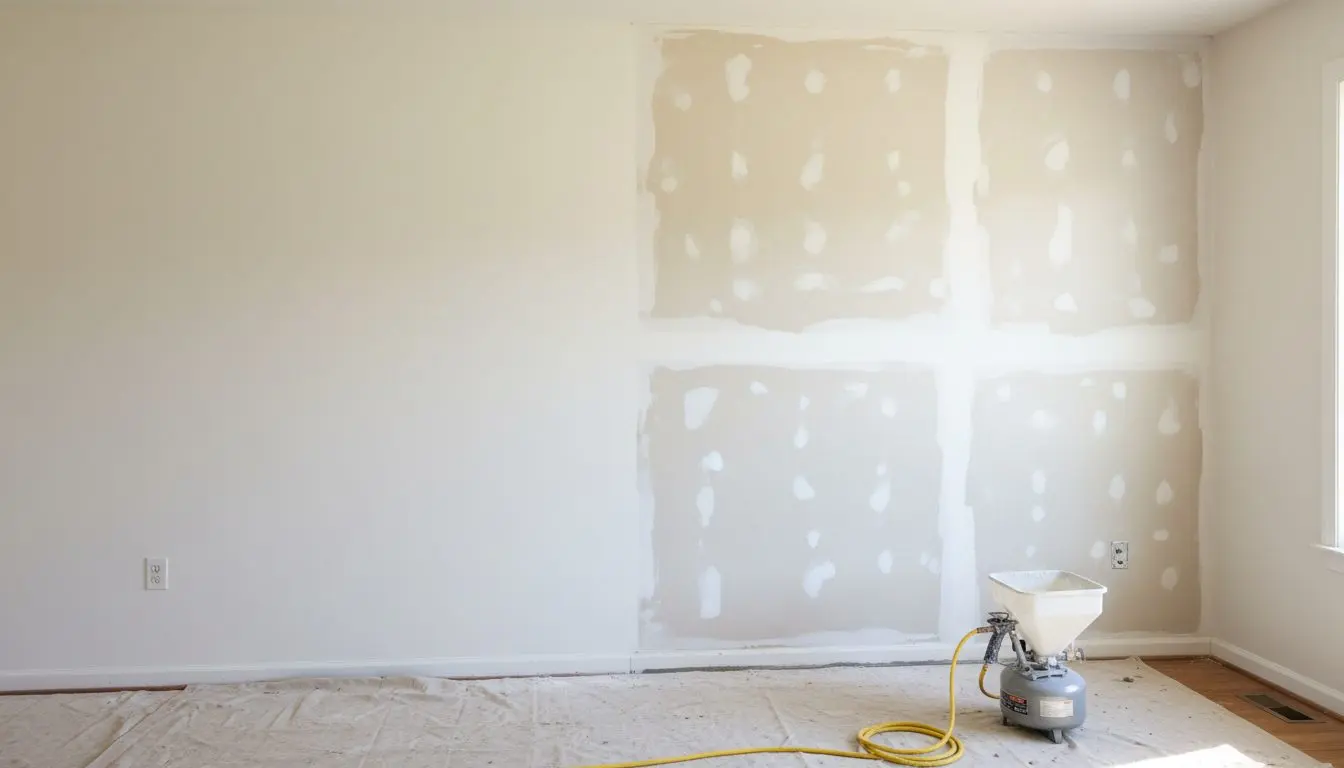
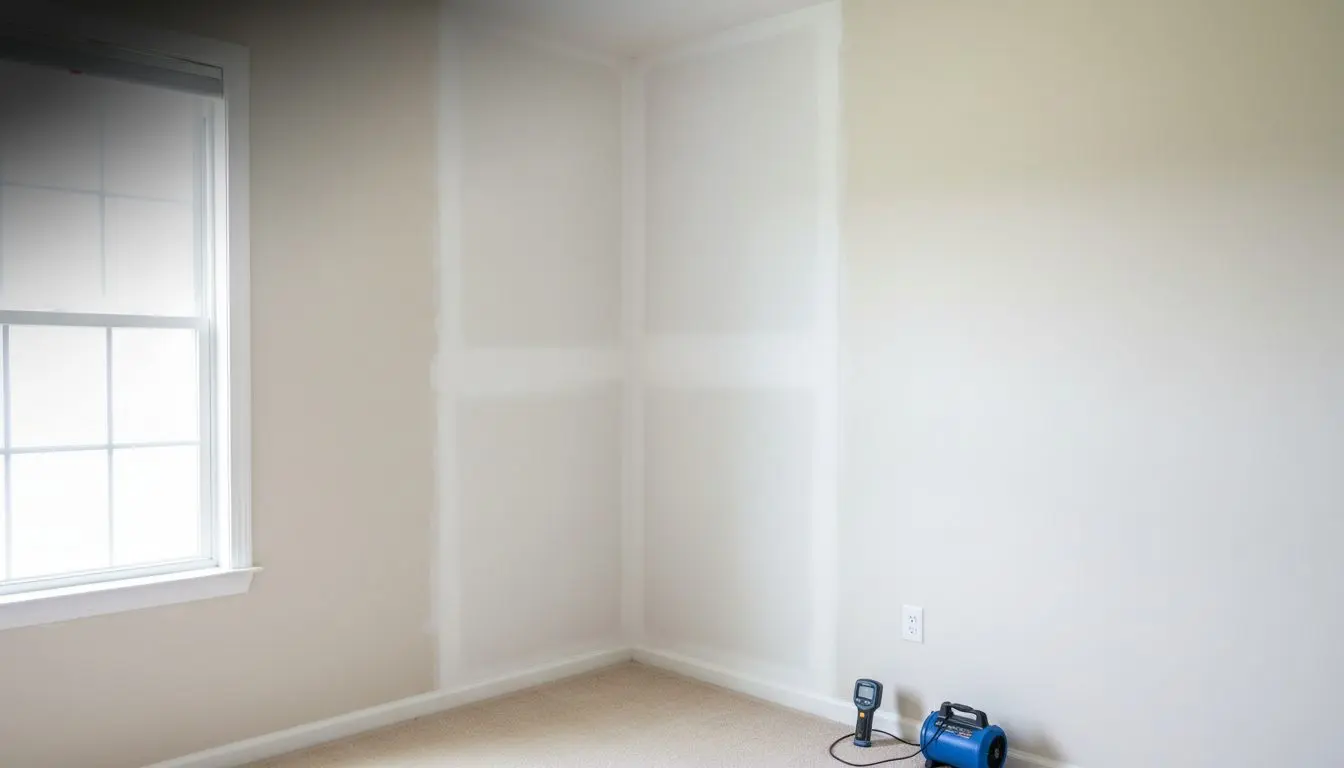
  • A living room wall with a finished repair in the middle of it, primed and blending into the older painted surface either side

    Drywall Repair

    For anybody looking at damage they have stopped seeing and a buyer would notice immediately. Landlords call between tenants, homeowners call the week before family arrive, and people call after a mover has clipped a corner. What makes people pick it is the texture matching, because that is the part that decides whether a repair reads as a repair or as a wall.

    Learn more about Drywall Repair
  • A living room wall part way through a knockdown texture, one half sprayed and drawn flat and the other half still smooth primer

    Texture and Finishing

    For anybody looking at a wall where one patch of texture does not match the rest, and for anybody tired of knockdown in every room. Plumbers leave a stripe of fresh mud behind them, builders need a new house to match the four either side, and owners of nineties houses want the walls flat. What people pick it for is the test board, sprayed and drawn in front of you before anything goes near your wall.

    Learn more about Texture and Finishing
  • A finished bedroom ceiling seen from below, smooth and primed with no joint lines in it

    Ceilings

    For anybody who has stopped looking up. Owners of 1960s and 1970s ranches call when the popcorn has to go before a house is listed, and landlords call when a ceiling has started to bow between the joists over somebody's bed. What people pick it for is the mess, or rather the handling of it. The room is sealed, the texture comes off wet instead of as dust, and the waste is bagged and gone the same day.

    Learn more about Ceilings
  • A bedroom wall and ceiling corner put back after a leak, primed and blending into the older painted surface around it

    Water Damage Repair

    For anybody standing under a stain that was not there last week, and for anybody with a wall that gives under a thumb. Homeowners call the morning after a storm, and landlords call when a tenant reports a bulge under a bathroom. What people pick it for is the meter. The wall goes back on two readings a day apart rather than on somebody's opinion that it feels dry, and the numbers come to you in writing.

    Learn more about Water Damage Repair

From your first call to a room that is ready for paint

Three to seven days on site for most rooms, and the dusty half of it is done inside the first two.

  1. You call and describe it

    Same day callback

    Tell us the room, roughly how big it is and what went wrong. A photograph from your phone saves a visit's worth of guessing, and you get a straight answer about whether the job is a morning or a week.

  2. A measure at the house

    Within two working days

    We measure the board area, look at what is behind the old surface and put a light in the crawl space if damp is any part of the story. The visit costs nothing and nothing is left for you to work out afterwards.

  3. A written quote, itemized

    Next day, by email

    The quote names the board, the finish level and the number of days on site. Where two ways of doing it both make sense, both are priced, so you can see what the difference actually buys you.

  4. Board goes up and is taped

    One to three days

    Furniture is sheeted, doorways are zipped and floors are covered before anything is cut. Then the sheets go up, get screwed off and taped, and the first coat of compound goes on. This is the loud part.

  5. Coats, then sanding

    Two to four days

    Every coat has to be dry before the next one goes over it, and in a Carolina July that takes longer than the bag says. We build those days in rather than shut moisture under a finish.

  6. We clean up and take it away

    Half a day

    Scrap, sheeting and the bagged sanding waste leave with the crew. You get the room back swept and vacuumed and ready for primer, and somebody walks it with you before the van goes.

Tell us which room it is and somebody comes out and measures it, free, and puts the days on paper before you commit to anything.

Get a free quote

What moves the price on a drywall quote?

Two rooms of the same size can quote a long way apart. What separates them is what sits behind the old surface and how good the finish has to be, and neither is visible from a doorway.

Board area, not room count
Quoting runs off the square footage of board and the number of cuts around windows, doors and returns. A small room chopped up by openings can carry more board work in it than a large plain one.
Level of finish
A garage getting one coat of paint stops at Level 3. A hallway with a window throwing light down it wants Level 5, which is a skim over the whole face and roughly another day of sanding per room.
Ceiling height and access
Anything above a comfortable reach means staging, two pairs of hands on every sheet and slower taping overhead. Stairwells and vaulted rooms cost far more in labor than they ever do in board.
What is behind the old surface
Until a sheet comes off, nobody knows whether the framing is straight, whether old wiring is stapled across it or whether the insulation is wet. Anything found there is priced when it is found.
Humidity and drying days
Compound gives its water up to the air, and from June the air here is already carrying all it can hold. A job that closes in four days in March can want six in August unless fans and a dehumidifier run.
Texture matching
Matching an existing knockdown or orange peel across a patch is slower than texturing a bare wall, because the gun has to be tuned to a setting somebody else chose thirty years ago.

Which of these actually apply to your job gets settled on the visit rather than on the phone, and it is written down before anybody starts. Get a free quote

FAQs

Frequently asked questions

What contractors and property managers ask before they award

Do you carry the insurance limits our contract asks for?

Yes, general liability and workers compensation, both current and both written in South Carolina. Send the requirements with the invitation and the certificate comes back with your entity named as additional insured, along with the waiver of subrogation if the contract calls for one.

What happens to our slot if the trade before us runs late?

We hold the crew for about a week where we can, and we tell you the day that stops being possible rather than the week afterwards. Four crews is what makes that workable, because a late framer means the men go somewhere else for a few days instead of the job losing its place.

Do you supply and fit the metal stud framing as well?

Yes, track and stud partitions, bulkheads and the framing for rated assemblies, all set out from your drawings. Taking the framing and the board as one package is also what ends the argument about whose tolerance put a wall out of plumb, because both sides of it are ours.

How do you invoice a job that runs several months?

Monthly, against a schedule of values agreed before we mobilize, with each line billed by percentage complete. Retainage is whatever the contract says it is. What you will not get is one number at the end and somebody in your office trying to work out what it covers.

Will your crew work nights while the tenant is trading?

Yes, and a good share of the retail and restaurant work here is done that way. Nights and Sundays are priced differently because the men are paid differently, and it sits on its own line in the quote so you can see what the trading hours cost and decide whether they are worth it.

Who gets the board up to the fourth floor?

We do, and it is in the price unless the tender says otherwise. Board comes in by boom to the floor it is needed on wherever a telehandler can reach, and by hoist or stair where it cannot. Say which at tender, because carrying two hundred sheets up a stairwell is a day nobody costed.

Do you price from drawings, or does somebody walk it?

Drawings for new construction, a walk for anything inside an existing building. A takeoff off plans is accurate on a building that does not exist yet. In a buildout the ceilings, the risers and whatever the last tenant left behind the partitions are things no drawing set will tell you.

What do you hand over for a rated wall inspection?

A photograph of every rated assembly before it is closed, the design number it was built to, and the labels off the board that went into it. An inspector wants to see the assembly rather than hear about it, and a wall closed on a Friday with nobody's camera on it is the one that gets opened.

Can an occupied apartment building be done in phases?

Yes, and it is most of the multi-family repair work here. We take a stack or a floor at a time, board it, finish it and move on, so you only ever have a handful of units off line. Notices to residents go out from your office, and the crew works inside whatever access window they were given.

What do you need from us before the crew mobilizes?

Power, somewhere lockable to stack board, and sign off from the inspector on anything about to be covered. After that, a named person on site who can answer a question inside ten minutes. The most expensive thing on a commercial job is a crew standing still waiting for a decision.

Who handles the punch list after you hand over?

We do, and we would rather walk the job with you before your client walks it. Dings from other trades, corner bead knocked in by a ladder and the odd flashed joint are normal on a buildout. One walk with a list and a work light beats three visits chasing items reported one at a time.

Do you take on prevailing wage or public school work?

Yes, and it is quoted as its own thing rather than at the private rate. Certified payroll, the reporting around it and the wage determination all sit on the job, and pretending otherwise at tender is how a sub ends up walking off a school in July. Send the wage decision with the invitation.

Greenville Drywall Elite

The book runs two to three weeks ahead, so most rooms start inside the month.

Greenville Drywall Elite hangs, tapes, finishes and textures board across Greenville and the mill towns and new subdivisions around it, from crawl-space repairs to whole rooms hung from scratch. Four crews finish a little over two hundred and twenty jobs a year, residential and commercial alike. Trading here since 2013.

Why Greenville homeowners keep calling us back

  • Thirteen years hanging houses across the Upstate, trading since 2013
  • The measure is free and the quote is itemized, line by line
  • Damp is checked at the crawl space first, not guessed at from the stain on the wall
  • Coats are timed to Carolina drying days rather than rushed to meet a schedule
  • The room is swept and vacuumed before anybody calls the job finished

If a baseboard is stained from the crawl space, a ceiling needs drywall, or a room needs finishing from scratch, call (864) 555-0119 and somebody will come out and measure it for free. The quote is itemized so you can see what each part of the job costs, and the coats are timed to the weather rather than rushed.

(864) 555-0119

Give us a call

141 Traction St, Greenville, SC, 29611

Where to find us

Get an itemized quote

(864) 555-0119 Get a free quote