
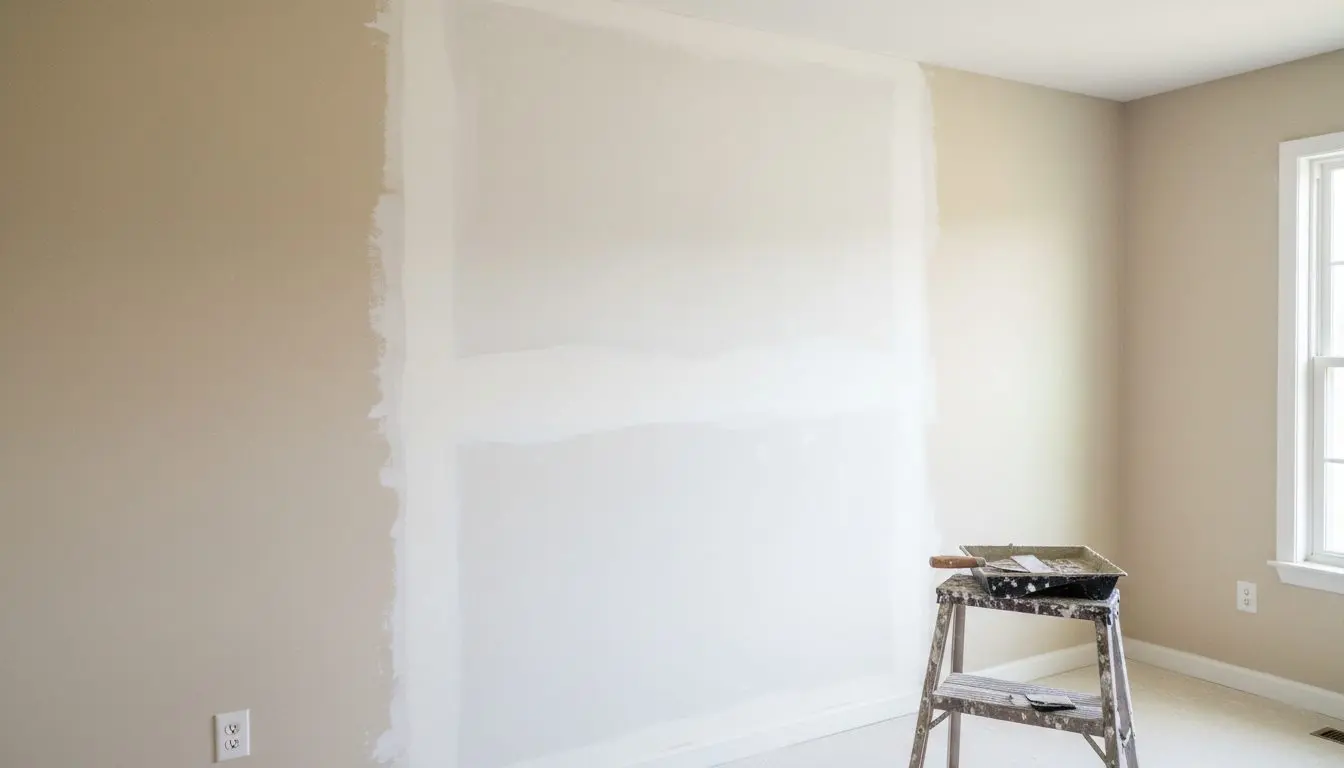
Drywall Repair in Greenville
Drywall repair and patching in Greenville
Cut back to sound board, backed and screwed to something solid, three coats feathered wide and the texture matched off a test board first.
Damage to board that is already on the wall
You end up with a wall where nobody can find the patch, including the people who watched it get cut out.
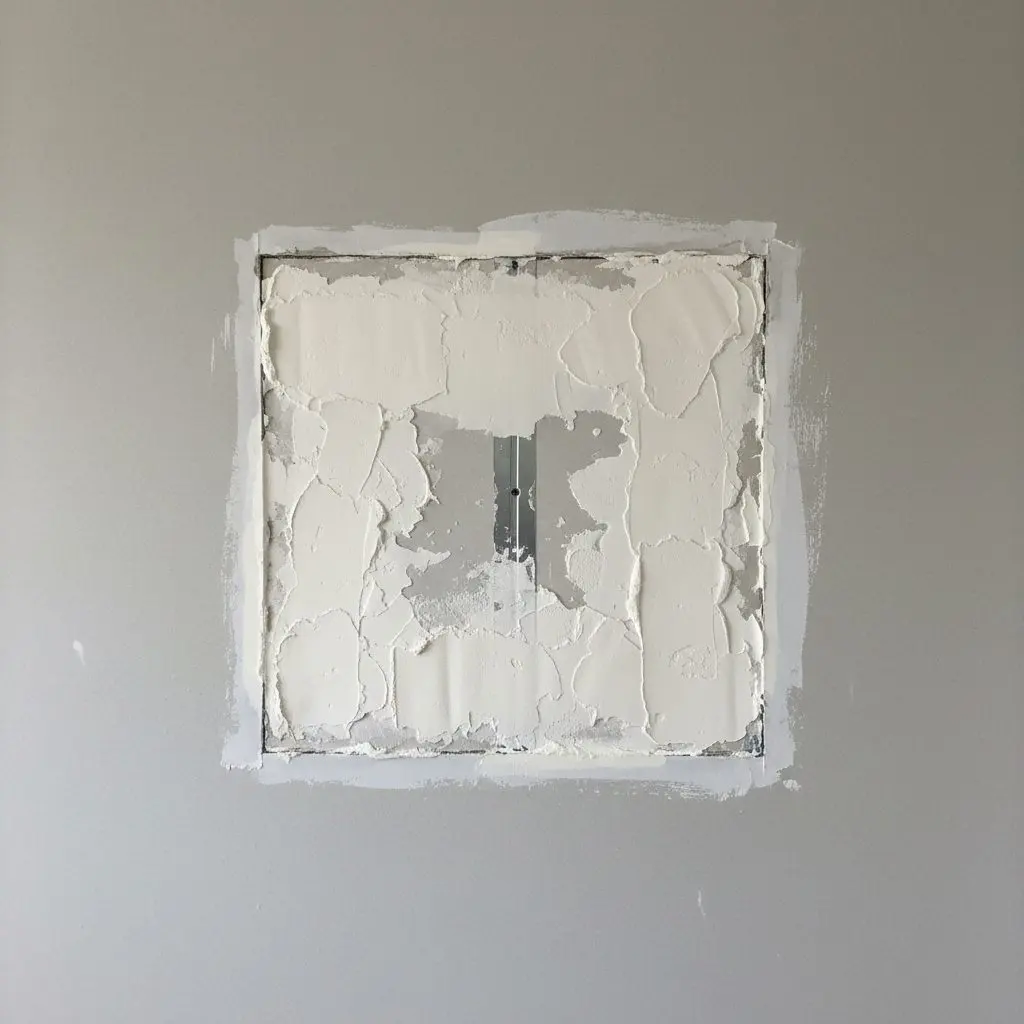
This is damage to board that is already on the wall. Holes, dents, cracked corners, nail pops, doorknob punches, settlement cracks and ceilings that have started to sag. If the board is wet or has been wet, go to water damage repair, because that job starts with drying. If a whole room is coming back to bare studs, that is drywall installation.
Repairs are the biggest single category here at roughly seventy jobs a year, and most of them are in occupied houses between forty and a hundred years old.
Most calls are holes. Doorknobs through a hallway wall, a foot through a ceiling from the attic, furniture damage on a move out, cracked corners, popped screws in new construction, and hairline cracks out of door heads.
Every patch is cut square back to a stud, or backed with a board strip screwed in behind so the new piece fixes to something solid rather than floating on tape. It is then feathered eighteen inches out, which is why a repair does not reappear as a bright rectangle in the sun.
Landlords call when a unit has to be turned around between tenants and the walls have taken four years of furniture, and homeowners call the week their in-laws are due.
Call for a free look at (864) 555-0119. You go from moving a picture to cover it every time somebody visits to forgetting there was ever a hole there!
What is in a repair price, backing strip included
A repair here is not finished when the hole is filled, it is finished when you cannot tell which part of the wall we touched.
- Damage cut back square to sound board
- Backing strips or studs behind every patch
- Paper tape and three coats, feathered wide
- Cracked corner bead cut out and replaced
- Nail and screw pops reset across the room
- Knockdown, orange peel or skip trowel matched
- Primer over the repair, floors vacuumed
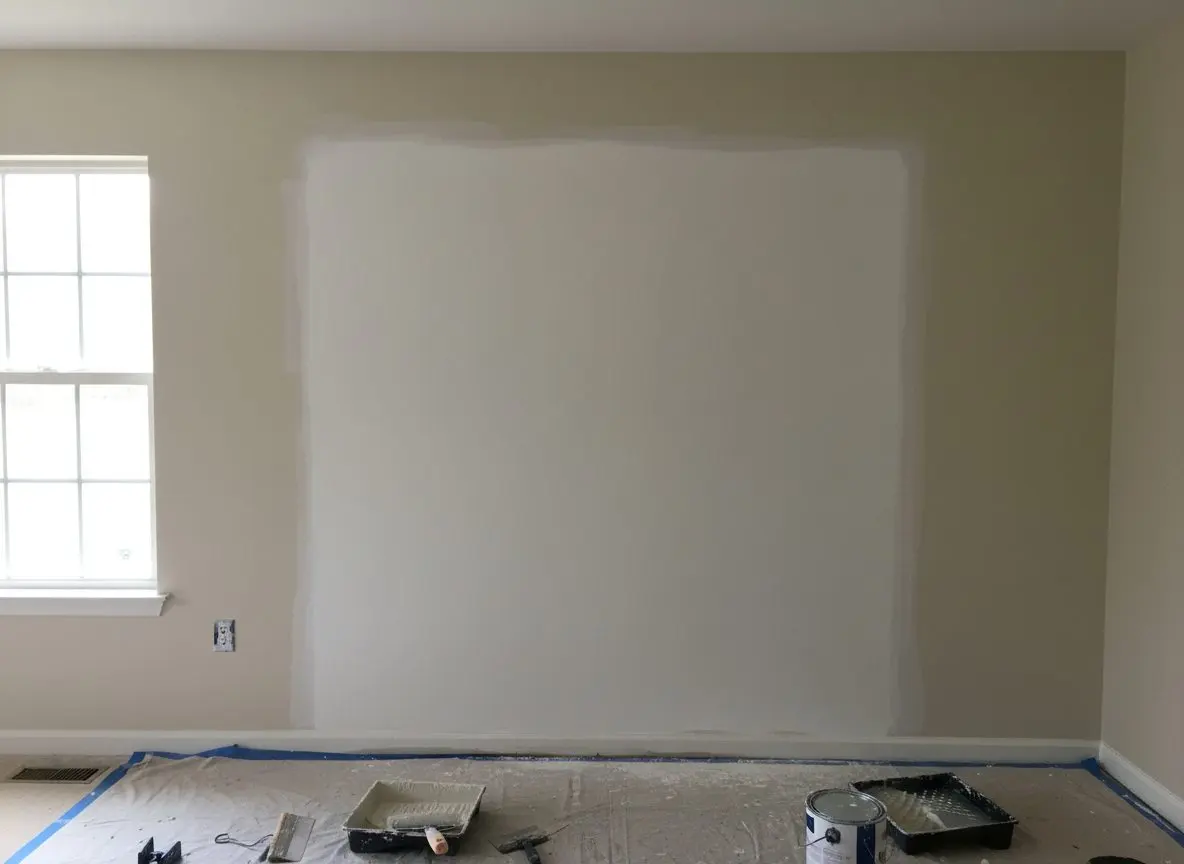
Patching the damage or rehanging the whole wall
Most walls that look like they need rehanging need three patches and an afternoon.
Patch when the damage is in separate places rather than everywhere, when the rest of the sheet is firmly fixed, and when the texture is flat or a light orange peel that blends without argument. Four holes in a hallway are four patches, and the whole thing is finished, textured and primed inside a day.
Reboard when the sheet is soft, when the paper face has come away over a broad area, when heavy knockdown means every patch shows its own edge, or when more than about a third of the sheet is coming out anyway. Chasing that with patches costs more in coats and sanding than a new sheet costs in board.
We say which on the visit, and we say it when patching is the answer even though rehanging invoices better. A wall gets tapped, pushed and looked at under a raking light, and if three patches will hold for twenty years that is what goes on the quote.
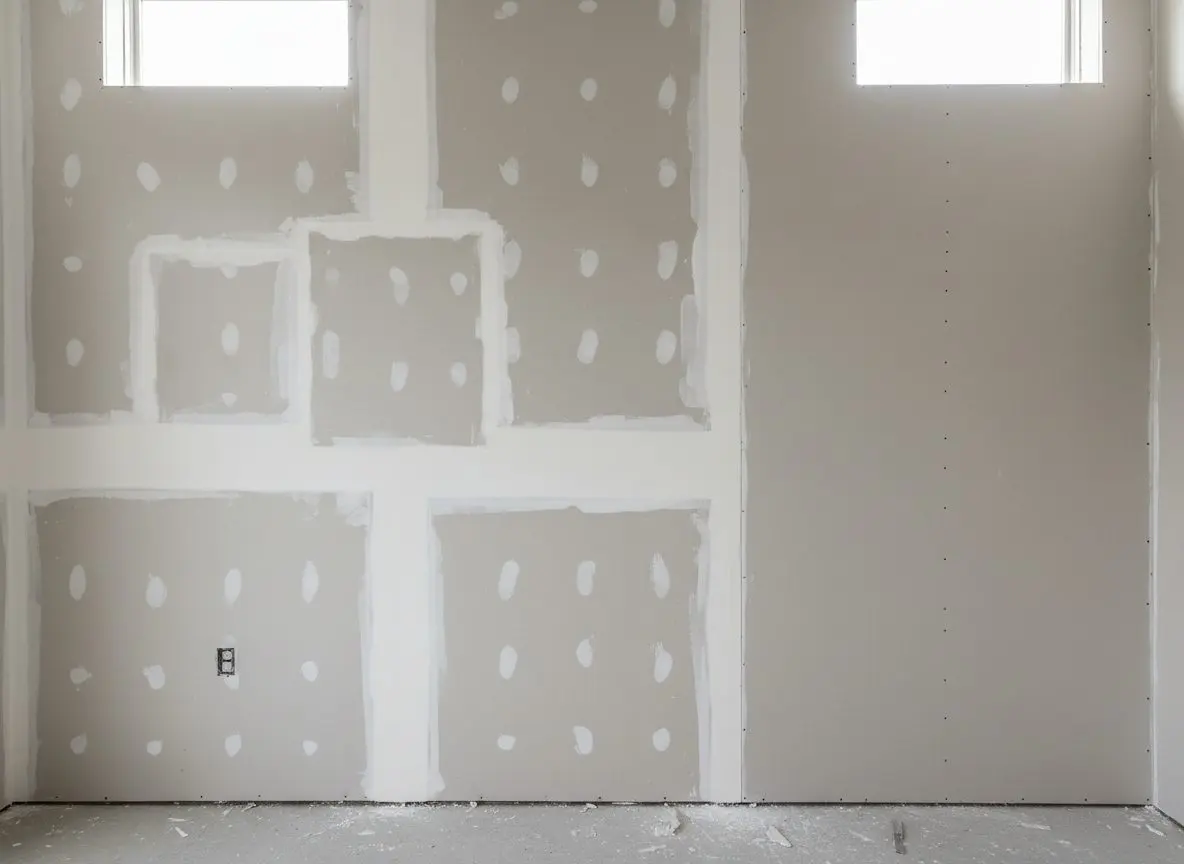
What goes behind a patch, and why it is never just tape
Every patch is screwed to timber or to a backing strip, never floated on tape and mesh alone.
A patch is only as good as what is behind it. Anything cut out is squared up until both edges land on framing, or a strip of board is screwed in behind the opening to give the new piece something to fix to. Mesh tape over an unbacked hole is what produces the soft, flexing square you can push with a thumb a year later.
Joints are taped in paper and bedded in setting compound rather than a lightweight all purpose mud, because setting compound cures by chemical reaction rather than by evaporation and will do it in a Carolina August when air drying compound sits there wet.
Coats are feathered eighteen inches wide, and every repair is read under a light held flat to the wall.
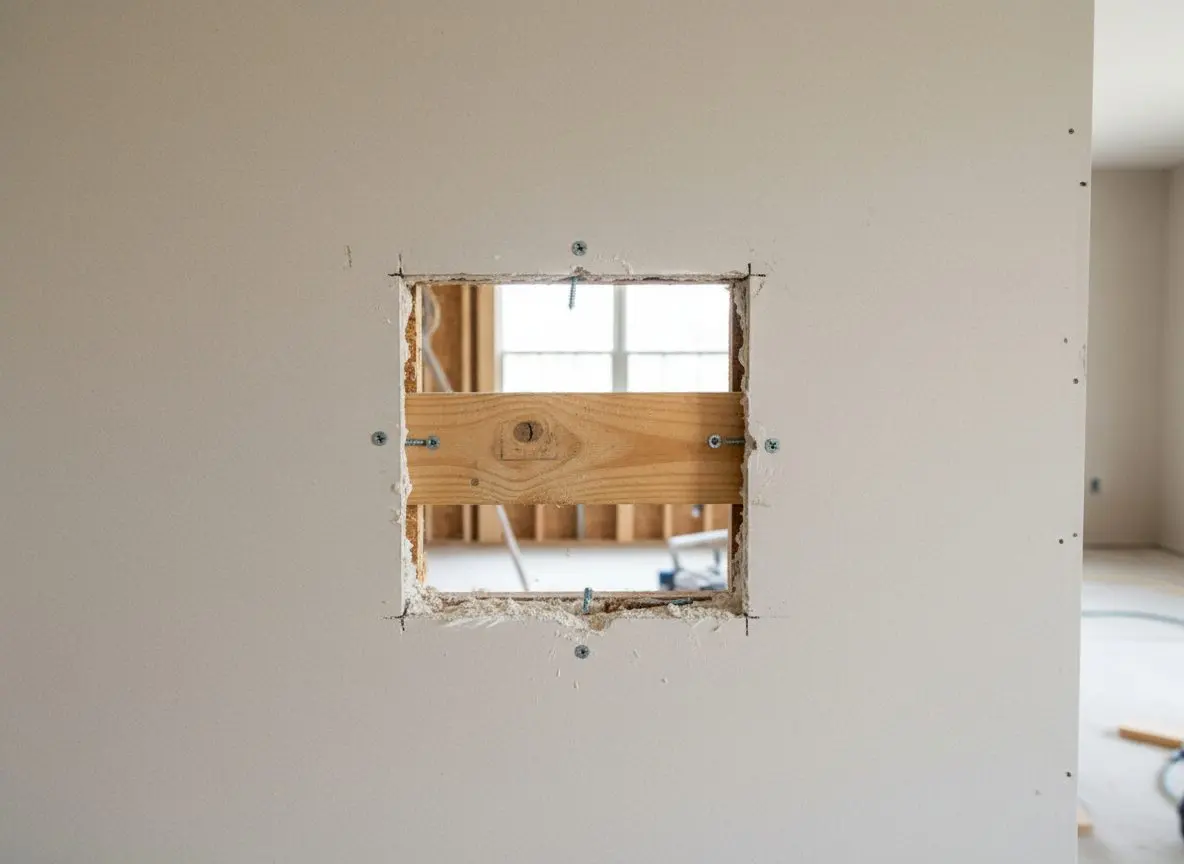

- Patches cut square to framing
- Backing strips behind unsupported edges
- Paper tape, never mesh alone
- Setting compound for the bedding coat
- Coats feathered eighteen inches out
- Checked under a light held flat to the wall
Ask the other two quotes what goes behind the patch, then call and we will tell you what goes behind ours.
(864) 555-0119What changes the number on a drywall repair
Two holes the same size can be an hour apart. On repairs the size of the damage matters far less than the texture around it and what is behind it.
- The texture you already have
- A flat or lightly rolled wall blends in one pass. A heavy knockdown from the nineties takes a test board, three attempts at the gun setting and a wider blend, and that is most of an extra visit.
- How many separate places
- Ten small holes cost far more than one large one. Every repair is its own set of coats, its own drying time and its own sanding, so the count of locations moves the number more than the square footage does.
- What is behind the opening
- A cavity with nothing in it takes a backing strip and two minutes. A cavity with a waste pipe, a duct or a bundle of cable in it takes hand cut backing and careful work, and sometimes another trade first.
- Plaster rather than board
- Plaster over lath is repaired differently and slower. It has to be cut in stages so the keys do not break back into the room, and the finished thickness has to be built up to meet the old surface.
- Ceiling or wall
- A ceiling patch is worked overhead against gravity, needs the room emptied or sheeted underneath, and usually takes an extra coat. Most ceiling repairs run close to double the same repair on a wall.
- Getting to it
- A crack twenty feet up a stairwell wall means staging built and taken down for every coat. Three visits with scaffold in between is the real cost of a repair nobody can reach off a step stool.
Which of these apply is obvious in about ten minutes with somebody standing in the room, which is why the look is free and the quote is written. Get a free quote
From your first call to a room that is ready for paint
Three to seven days on site for most rooms, and the dusty half of it is done inside the first two.
Tell us which room it is and somebody comes out and measures it, free, and puts the days on paper before you commit to anything.
Get a free quoteWhy a findable patch costs you money at sale
A patch you can find is worth less than no patch at all, because a buyer reads it as a repair somebody rushed.
Nobody publishes a resale figure for drywall repair, and any percentage you are quoted for it has been made up on the spot. The Cost vs Value report from Remodeling magazine measures whole projects rather than line items, and repairs are too small and too varied to appear in it.
What is true is what a home inspector does in this market. In a South Carolina inspection, a fresh patch on a ceiling or along the base of a wall gets a moisture meter on it and a note in the report either way, so a repair done without addressing the cause reads as a concealed defect rather than as maintenance.
Fixing the pier, the vent or the leak first and saying so in writing is the part that holds value.
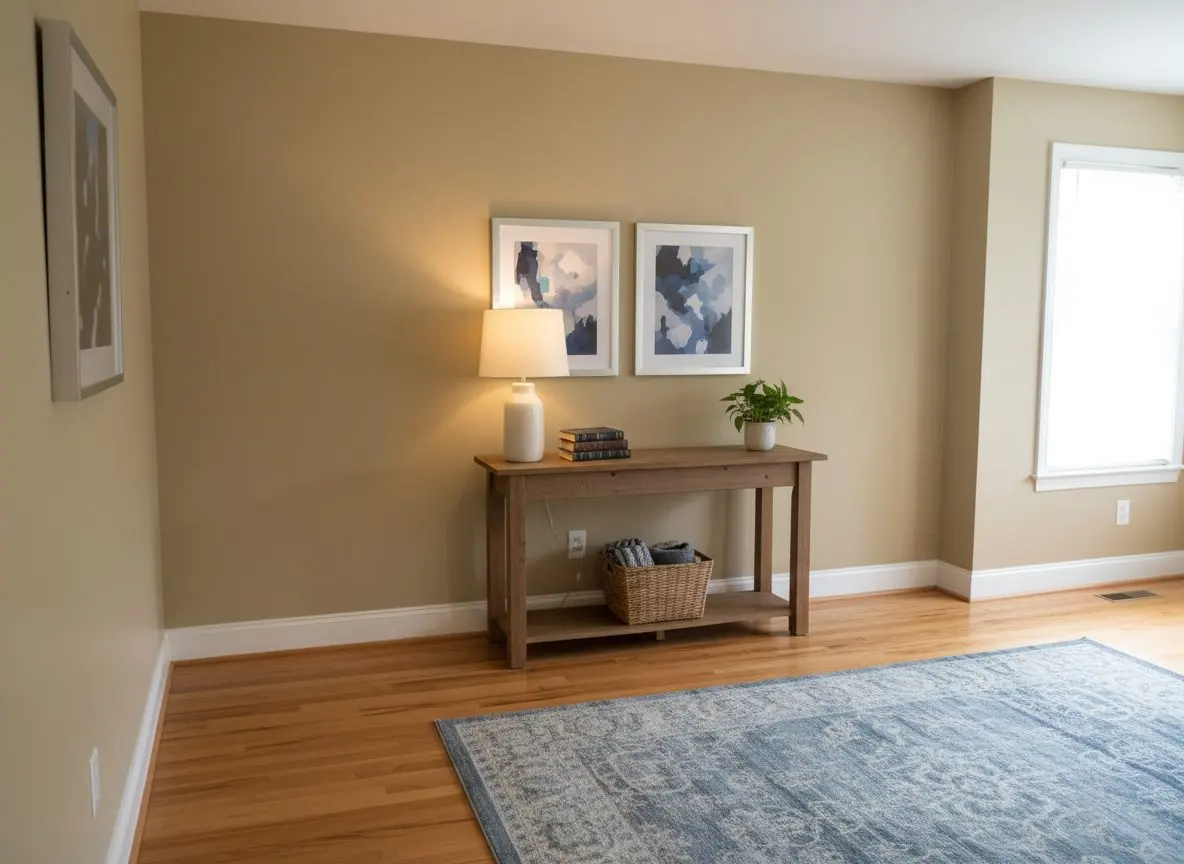
August drying, mill house piers and walls that are not board
Patches here dry slowly in summer, mill house cracks come back from below, and half the older stock is plaster pretending to be board.
- A patch will not dry on its own in August
- A small repair in an occupied room with the air conditioning on has almost no air moving over it. In August an all purpose coat can still be soft next morning, so setting compound and a fan are standard here, not something we do if we remember.
- Mill house cracks start at the pier
- The 1920s stock in the West End, Overbrook and North Main sits on brick piers over a crawl space, and they move with the season. A diagonal crack out of a door head is the floor telling you something, and it returns unless the pier is shimmed.
- Half the older walls are not board at all
- Anything built here before about 1955 is likely plaster over wood lath or over rock lath. Cutting into it the way you cut board brings a foot of ceiling down with it, so those walls are scored, cut in stages, and keyed back rather than opened up.
Repairs across the Upstate that nobody can point to
Six repairs finished in the last year in real houses across the Upstate. Each card names what made that one awkward.
-
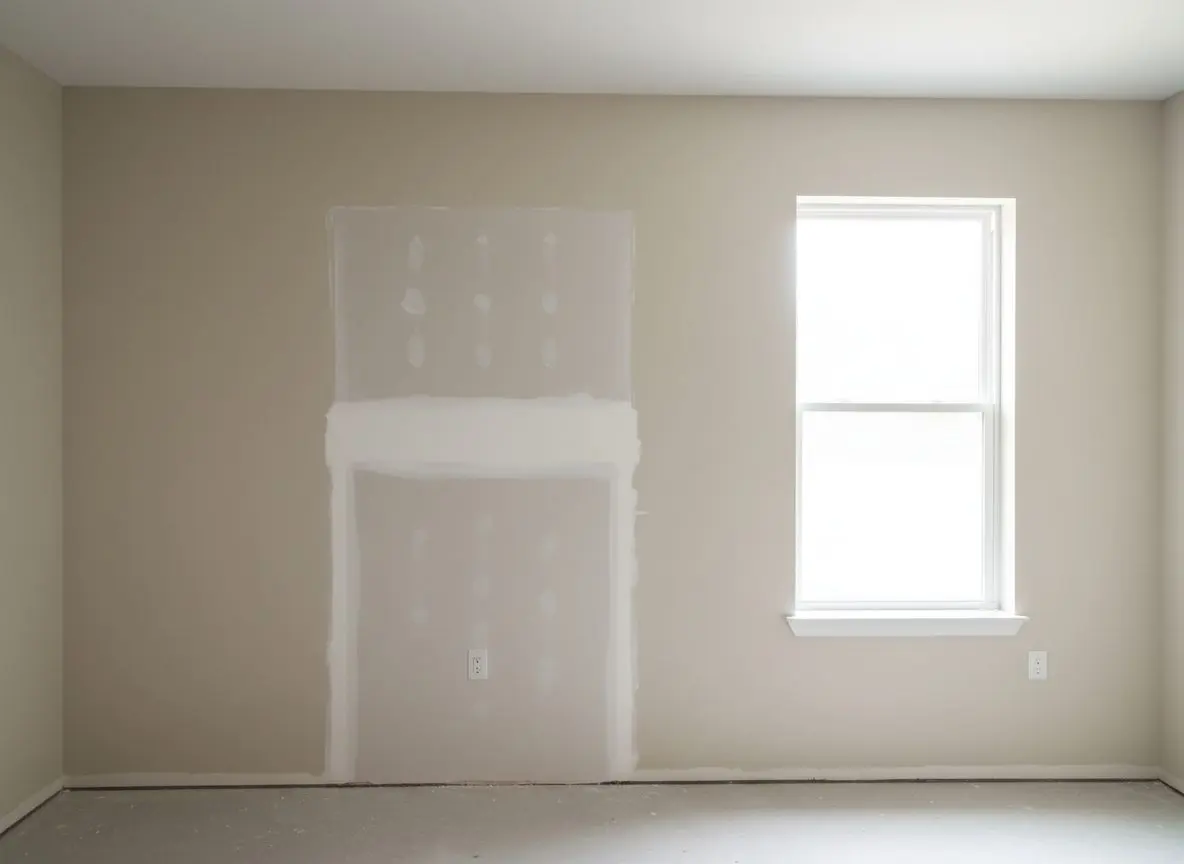
Doorknob damage, four rooms
Wade Hampton
A rental turned around between tenants in one day, with backing blocks let in behind each strike so the same holes do not come back.
-
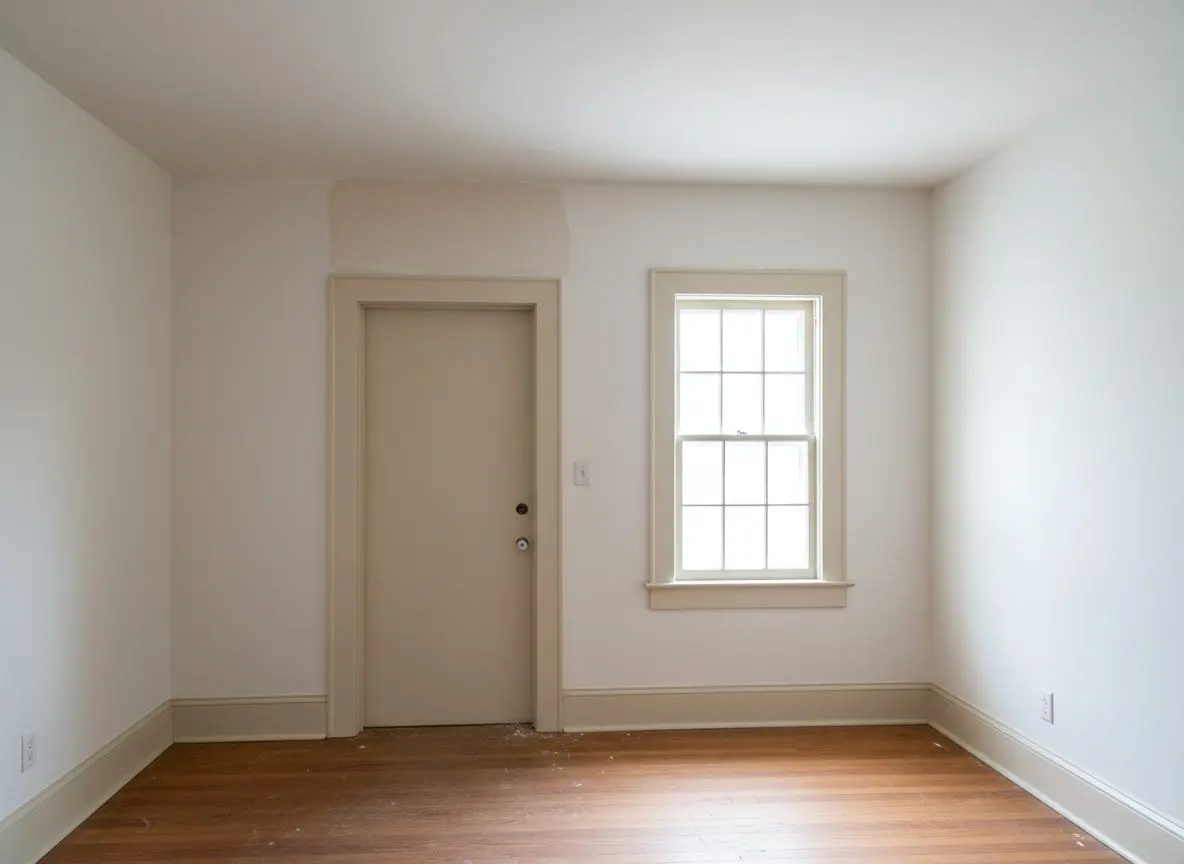
Settlement crack over a door head
Overbrook
A 1926 mill house with a diagonal crack that had been filled twice before. The pier under it was shimmed first, then the plaster was cut back and keyed.
-
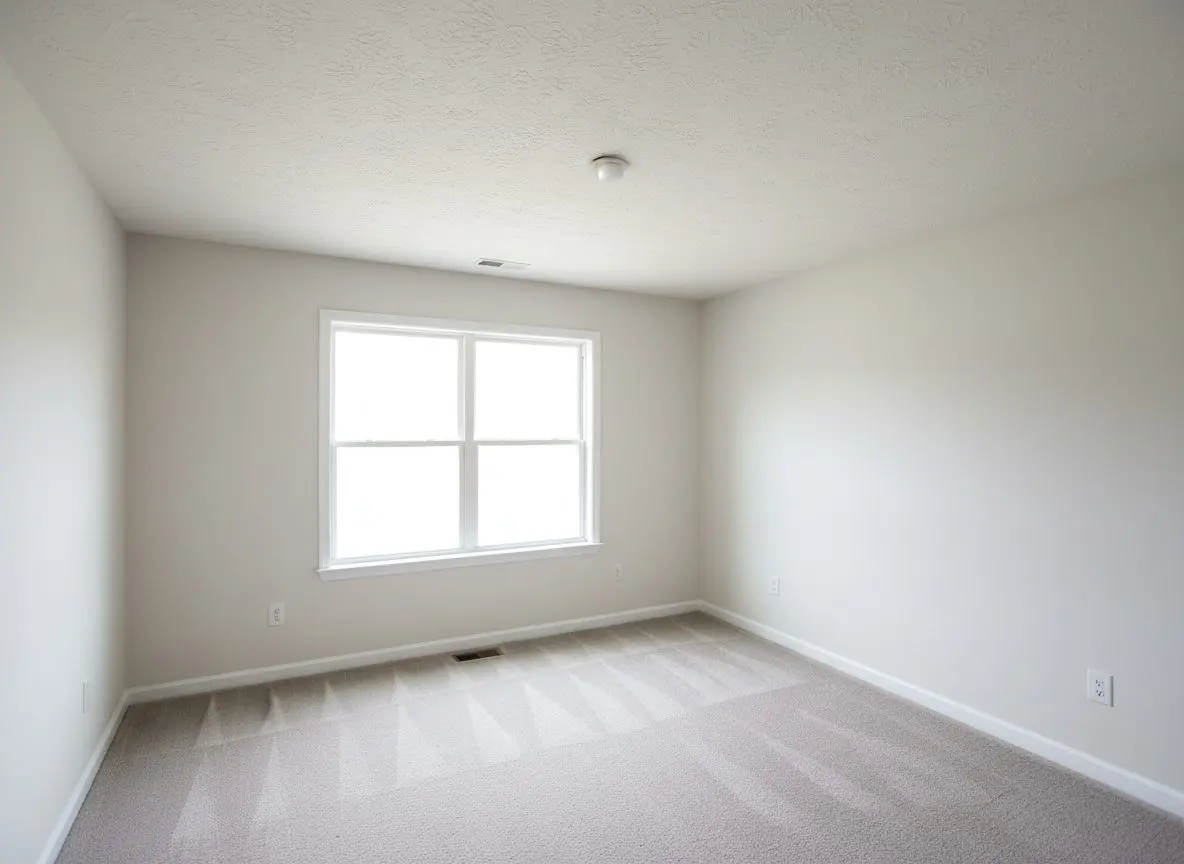
Foot through a bedroom ceiling
Berea
An attic misstep between joists. The board came out to the two nearest joists, went back in five eighths, and the popcorn was matched off a test board.
-
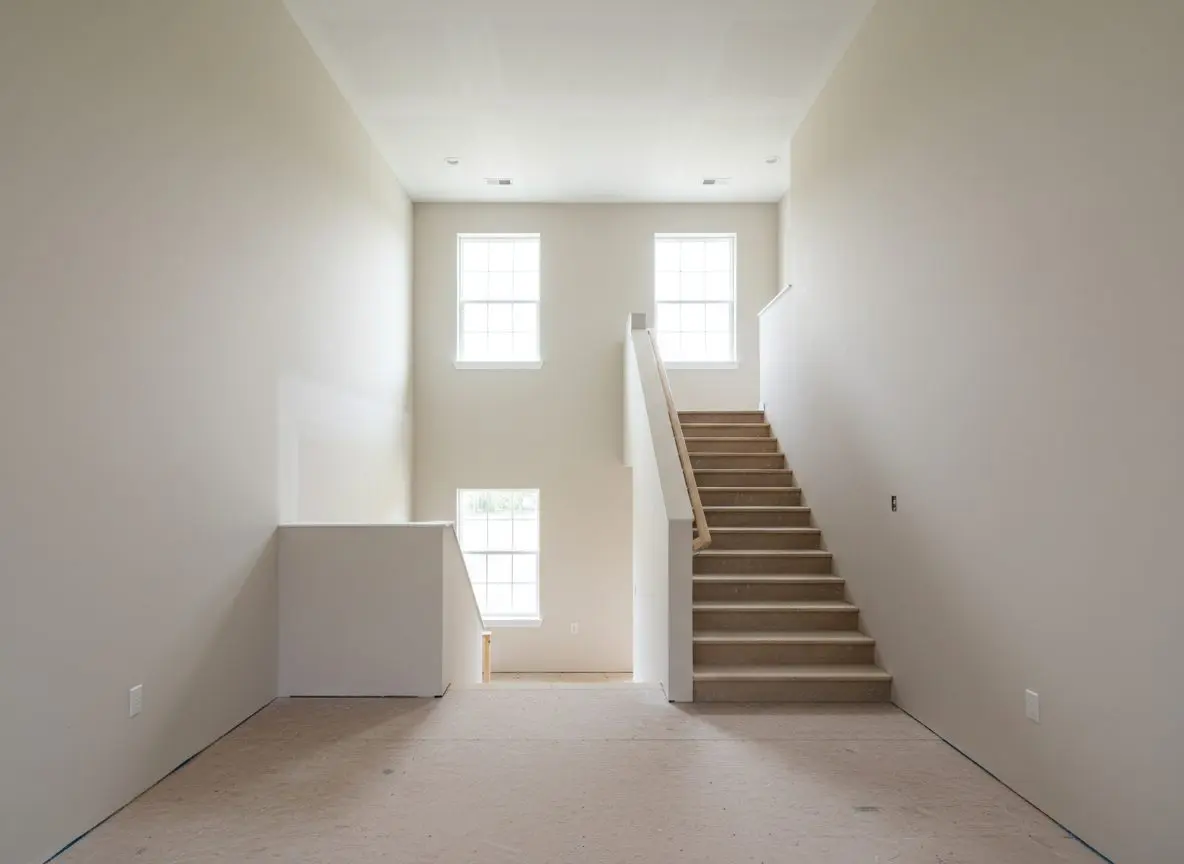
Knockdown match on a stair wall
Five Forks
Furniture damage in a two story stairwell. Texture was carried to the nearest corner rather than blended, so no patch edge reads from the landing.
-
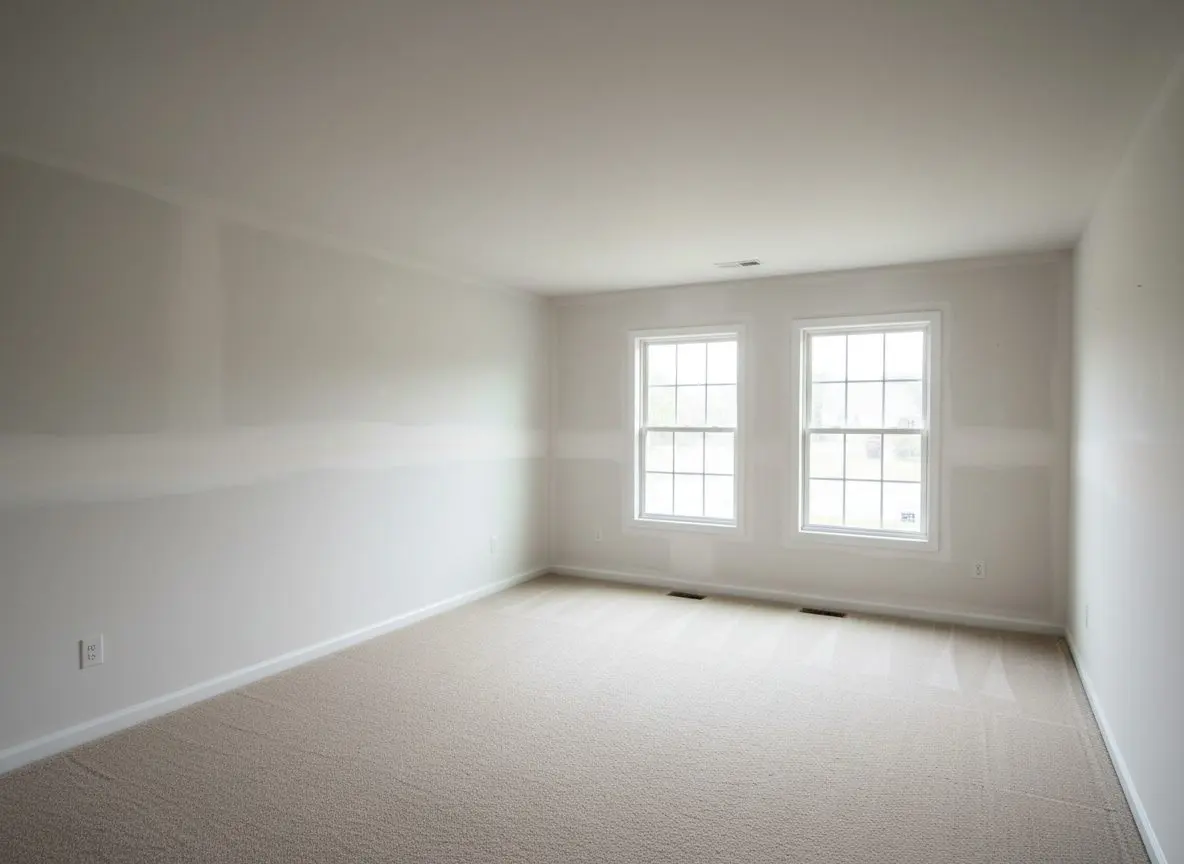
Nail pops in new construction
Powdersville
Sixty pops in a house two years old, all reset with screws either side, refinished and retextured in a day and a half.
-
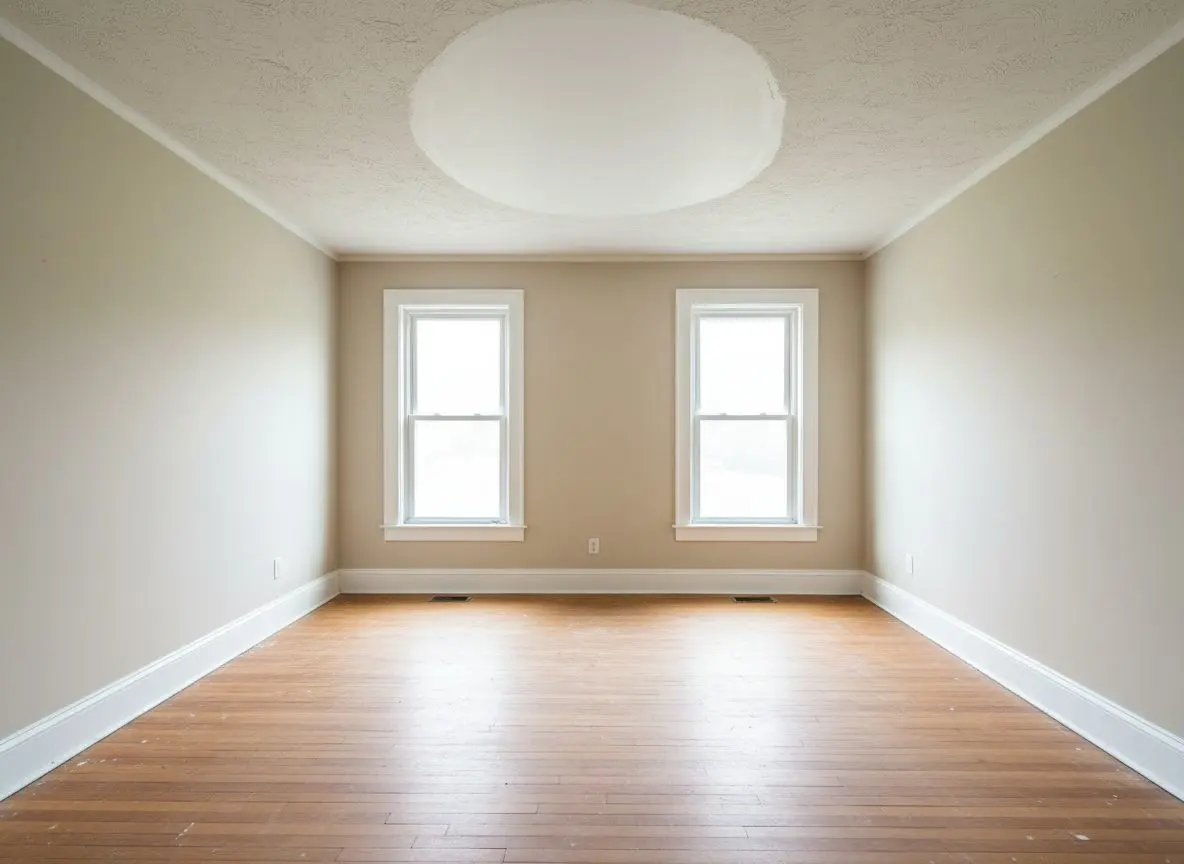
Plaster ceiling keyed back
North Main
A section of lath and plaster that had lost its keys and was sagging. Cut in stages, screwed to washers and skimmed flat rather than pulled down.
What people said once they stopped seeing the patch
-
Rated 5 out of 5
Screw pops all over the upstairs of a 2022 build. They pulled the board back where the framing had moved rather than just filling them. None have come back.
Curtis B. Greer Drywall Repair -
Rated 5 out of 5
Garage into an office, and the boarding was the part I dreaded. August air meant the coats wanted two extra days, and they told me that on day one rather than at the end. It reads like a real room now.
Alicia N. Fountain Inn Drywall Installation -
Rated 5 out of 5
The house is from 1986 and every ceiling had popcorn. My realtor said leave it alone. Wes put a light up there and showed me the ripples underneath, so we did the den first to see. Flat now.
Bonnie H. Mauldin Ceilings
Reviews are easy to write and hard to check, so ask us for a finished job near you and go and look at it.
Get a free quoteFAQs
Frequently asked questions
The questions that come up before a wall gets patched
Is one small hole worth calling somebody out for?
Yes, and a lot of the diary is exactly that. A single hole is a short visit, and if you have three or four spread around the house they get done in the same trip, which is far cheaper than four separate call outs. Tell us everything on the phone and it all gets quoted together.
Will the patch be invisible, or just close?
On a flat or lightly textured painted wall it disappears entirely once the wall is recoated. On heavy knockdown, honest is close rather than perfect, because the original was sprayed by somebody with a gun set a certain way in 1994. We match off a test board and show it to you before it goes on the wall.
Do you paint afterwards, or leave it primed?
We prime as standard and stop there unless you ask. Painting only the patch always shows as a difference in sheen on a wall with any age on it, so the right finish is a full recoat corner to corner, and that is a painter's day rather than ours.
How long does a normal patch take from start to finish?
A single hole is one visit of a few hours plus a short second visit for the final coat and texture, usually two or three days apart. Compound has to dry properly between coats and there is no way to compress that in summer here without it shrinking back later.
What causes cracks to keep coming back in the same spot?
Movement, almost always. A crack over a door or running up a corner is the structure moving seasonally, and the compound is just the thing that gives first. We can fix the crack and it will look right, but unless the pier, joist or truss causing it is dealt with it will open again.
Can you match the popcorn on my ceiling instead of scraping it?
Yes, for a small patch. Popcorn is sprayed from an aggregate hopper and a matched patch is convincing at normal viewing distance. Anything larger than about three feet across is usually better scraped and retextured across the whole ceiling, because a big popcorn patch reads as an island.
Do you tidy up, or do I need a vacuum afterwards?
The room is sheeted before anything is cut, sanding runs on a vacuum, and the floor is vacuumed rather than swept before the crew leaves. Fine dust still travels, so soft furnishings near the work get covered and it is worth closing the door on the next room.
My landlord wants this fixed. Who do you bill?
Whoever books the work. We take instructions from one person so nothing gets done twice or not at all, and we are happy for that to be an owner, a management company or a tenant. Photographs before and after go with the invoice as standard on rental work.
Can you repair a hole with a pipe or a wire right behind it?
Yes. The opening gets squared up so we can see everything in the cavity, and backing is cut by hand around whatever is in there rather than screwed blind. If a pipe is weeping or a cable looks unsafe, the wall stays open and you get a photograph and a phone call first.
Should I fix everything before I list the house?
Fix it, and fix the cause first. A photographed, primed repair with a note about the vent or the pier that caused it reads as maintenance. The same repair with no explanation reads to an inspector as something being covered up, and it comes back at you in negotiation.
Do you fix the corner beads that have cracked open?
Yes, and it is a common one on houses ten to twenty years old. The bead itself has usually pulled or corroded, so the answer is to cut the damaged length out, fix new bead in, and refinish the corner rather than fill the crack and hope. It sets it up for another twenty years.
Will you look at damage another contractor already patched?
Often, and we will tell you plainly whether it needs redoing or just finishing properly. The usual finding is mesh tape over an unbacked hole, which flexes and cracks around the edge. That gets cut out and backed, which is a slightly bigger job than doing it right the first time.
Greenville Drywall Elite
The book runs two to three weeks ahead, so most rooms start inside the month.
Greenville Drywall Elite hangs, tapes, finishes and textures board across Greenville and the mill towns and new subdivisions around it, from crawl-space repairs to whole rooms hung from scratch. Four crews finish a little over two hundred and twenty jobs a year, residential and commercial alike. Trading here since 2013.
Why Greenville homeowners keep calling us back
- Thirteen years hanging houses across the Upstate, trading since 2013
- The measure is free and the quote is itemized, line by line
- Damp is checked at the crawl space first, not guessed at from the stain on the wall
- Coats are timed to Carolina drying days rather than rushed to meet a schedule
- The room is swept and vacuumed before anybody calls the job finished
If a baseboard is stained from the crawl space, a ceiling needs drywall, or a room needs finishing from scratch, call (864) 555-0119 and somebody will come out and measure it for free. The quote is itemized so you can see what each part of the job costs, and the coats are timed to the weather rather than rushed.
Give us a call
office@greenvilledrywallelite.com
Send us a message
141 Traction St, Greenville, SC, 29611
Where to find us