Residential drywall in Greenville, done around a family still living there

Floors covered from the front door in, doorways sealed before a sheet is cut, and a start date you are given in writing rather than a week we are aiming for.

Drywall done in a house nobody has to move out of

You get the room back swept, primed and empty of us, in a house nobody had to move out of.

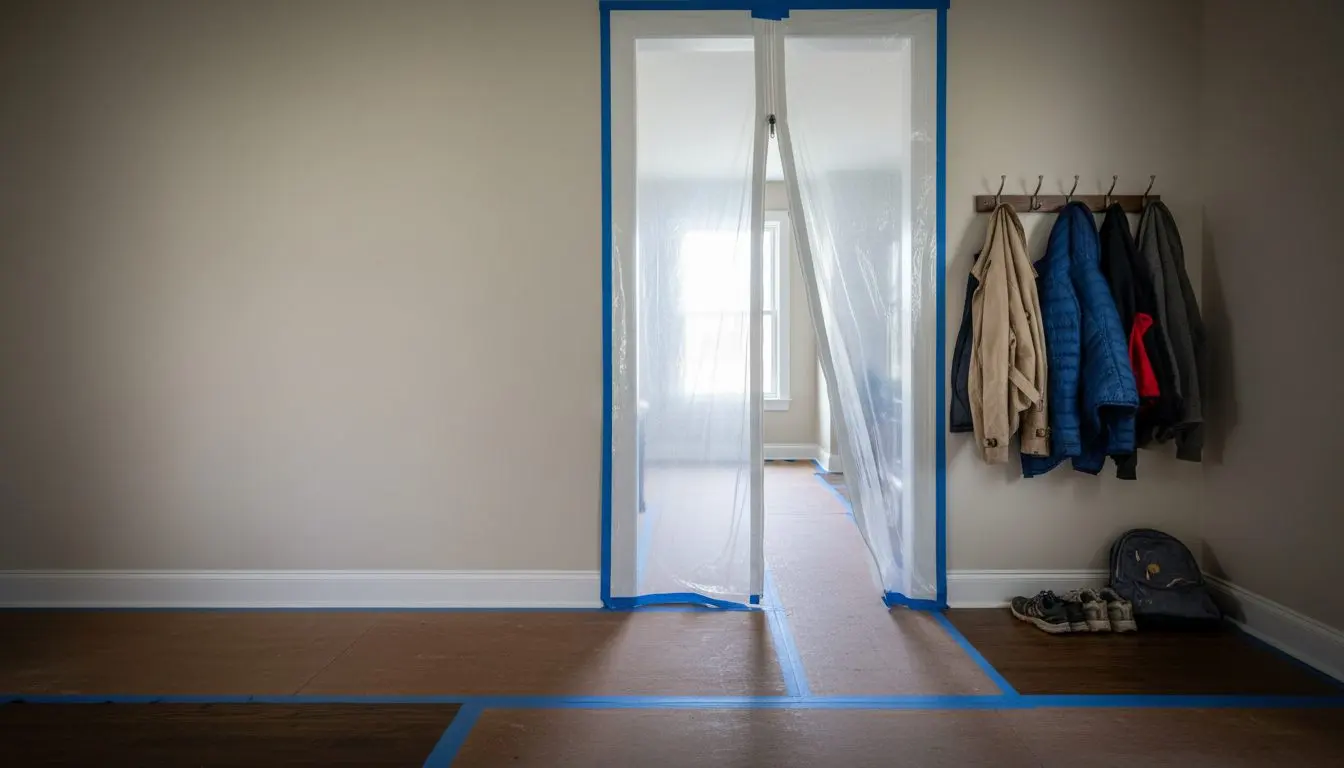
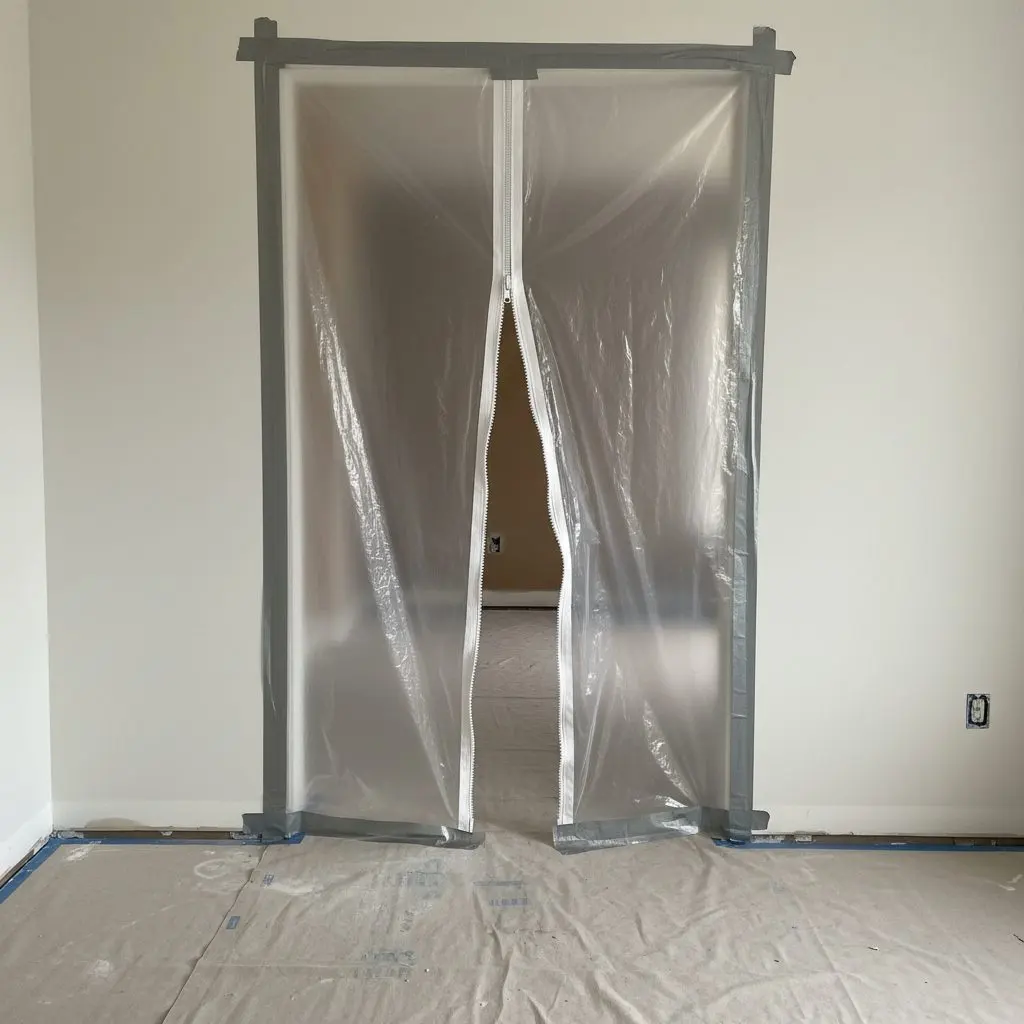
One close, square view of a doorway sealed in plastic sheeting with the zip half open and a covered floor running up to the threshold

Greenville Drywall Elite is a drywall contractor working out of one yard in Greenville, fully insured in South Carolina, and around half of the two hundred and twenty jobs a year are in houses somebody is living in at the time. Most of those rooms start inside two to three weeks.

Patches, whole rooms, ceilings, texture matching and putting a room back after a leak, in houses from 1920s mill cottages to new construction. The work itself is on the repair and texture pages. This one is about having it done while you still live there. The loud, dusty part of any job is the tear out morning and the sanding, and both are named on a date beforehand so you can be somewhere else for them.

How much of the house does this take over? One afternoon patching a hallway corner for somebody listing next month, or three weeks rehanging a whole floor for a family whose supply line let go over Christmas. Most jobs sit nearer the first.

Book a free visit at (864) 555-0119 and say which room you have stopped using. You go from shutting a door on a room nobody sits in to putting the furniture back where it always belonged!

What we do differently in an occupied house

The work is the same as any other job. What changes is that you are living in the middle of it.

A contractor wants to know when the crew starts and how the invoice splits. You want to know whether you can cook in your own kitchen on Wednesday, where the dog goes on the sanding day, and whether the dust ends up in the bedrooms at the far end of the house.

So everything below is about the house rather than the schedule. Rooms are sealed before anything is cut, the floor is covered from the front door to the room being worked in, the sanders run on vacuum hoses, and the hallway is clear again before the crew leaves each evening.

You are told which two days are the loud ones early enough to arrange to be out for them.

  • Floors covered from the front door to the room
  • Doorways sealed and zipped before anything is cut
  • Vacuum sanders, and the room vacuumed not swept
  • The two loud days named on a date, in writing
  • Furniture sheeted or moved, never worked around
  • Same crew each day, hallway clear by the evening
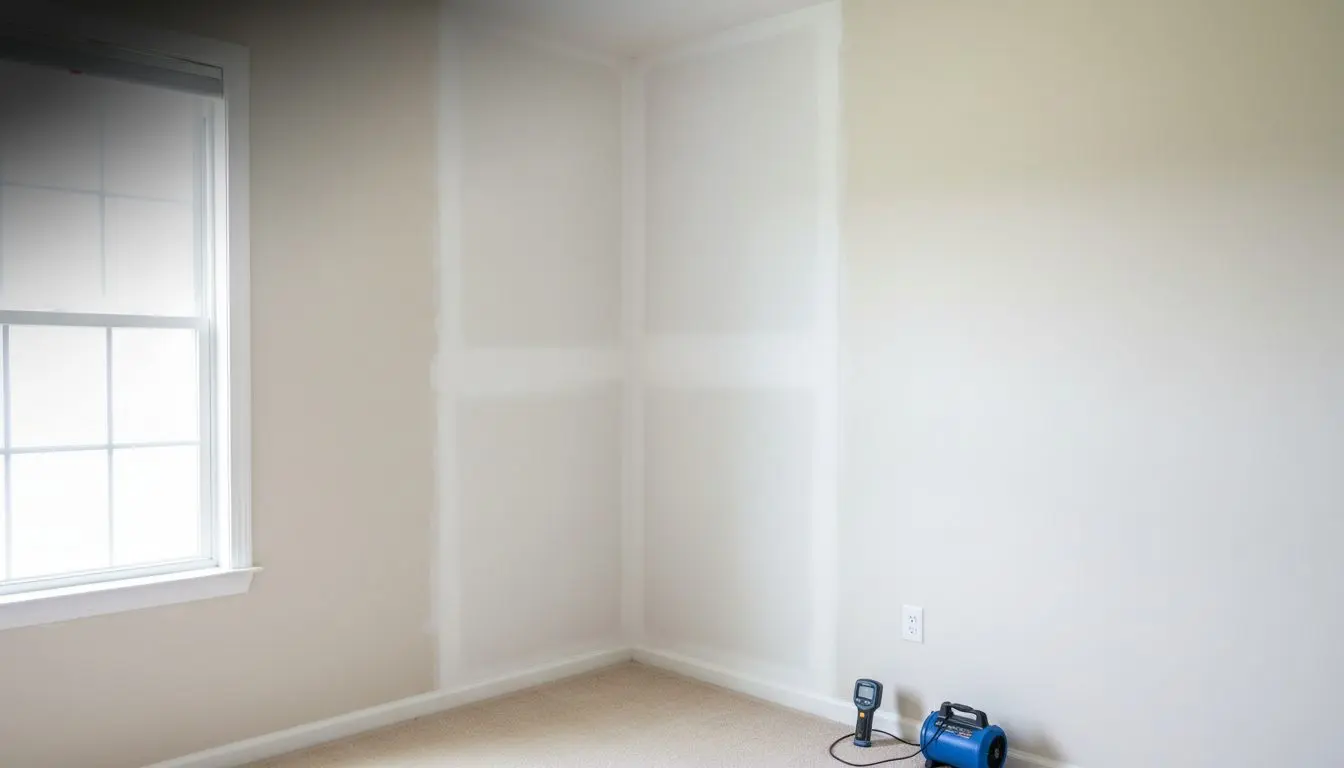
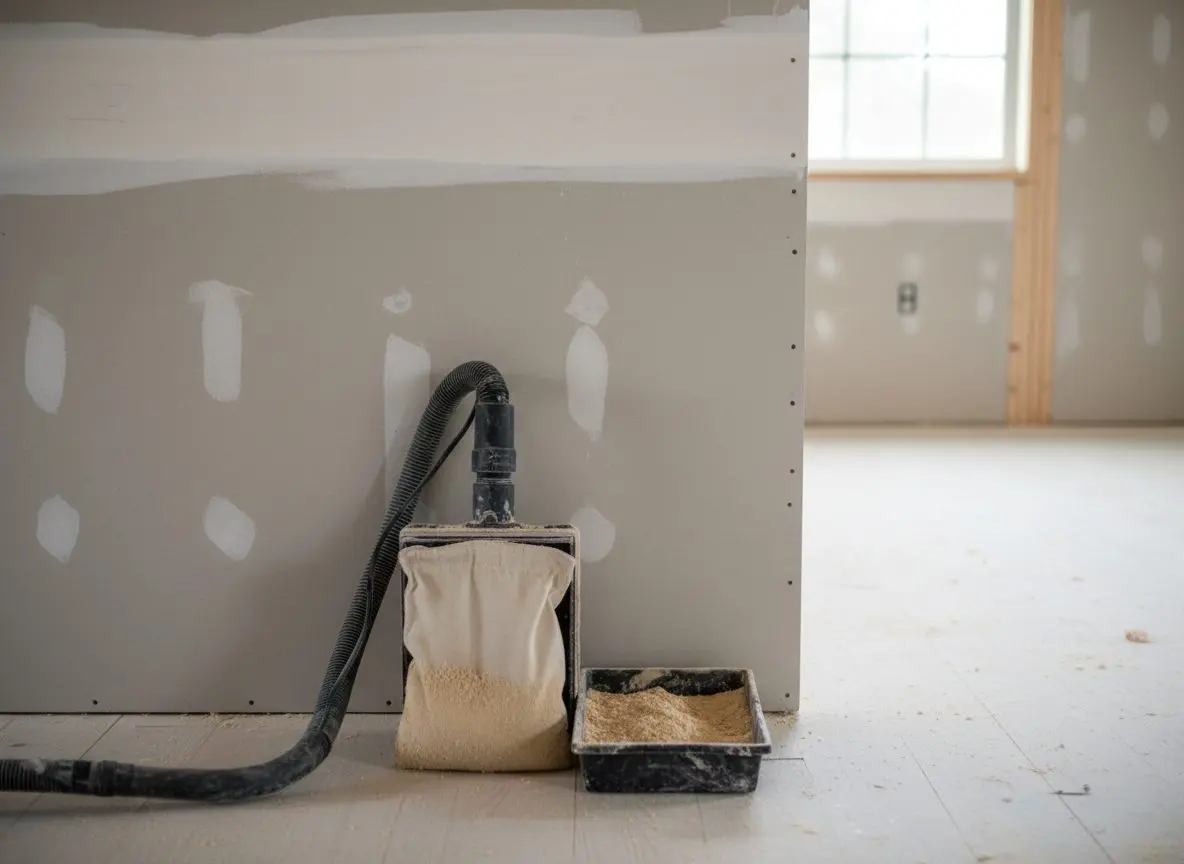
A sander fitted with a vacuum hose resting against a part hung wall, the collection bag half full at its base and dust still on the tray
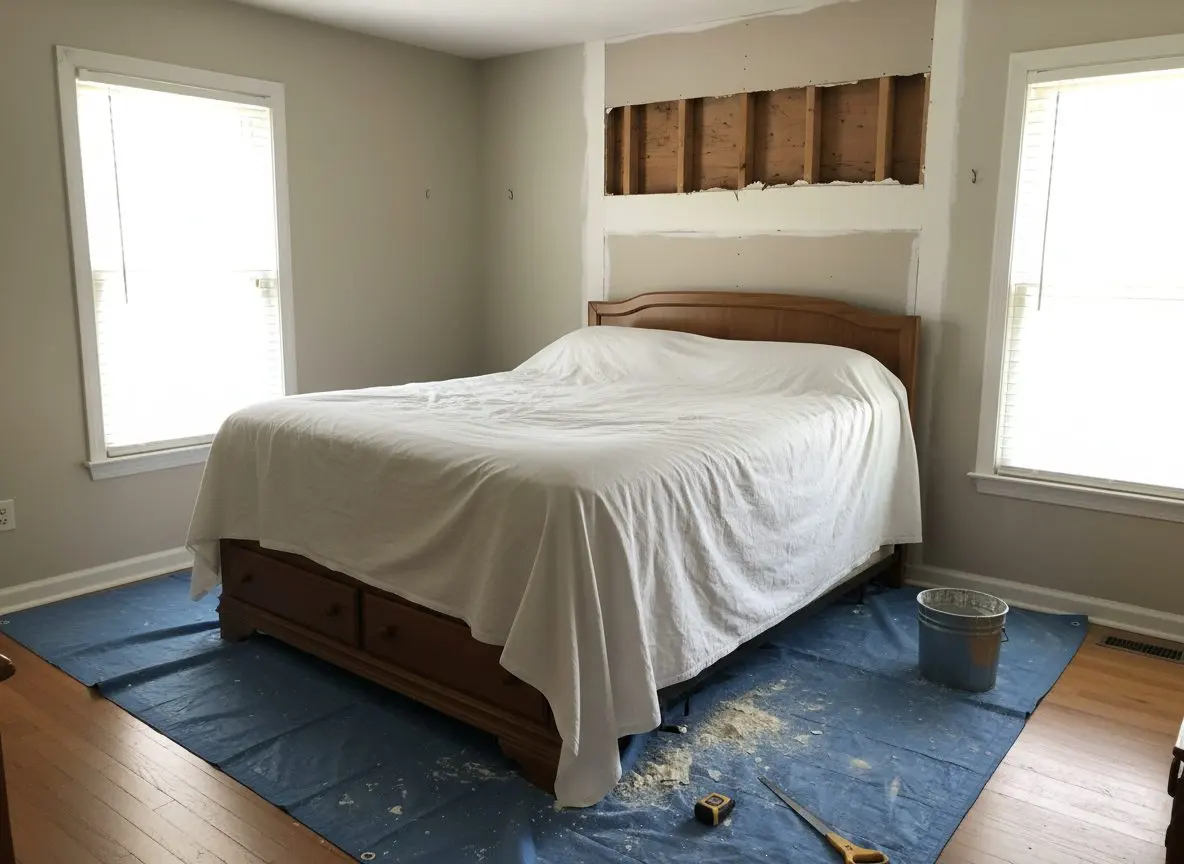
A bedroom mid repair, the bed and dresser pulled into the center and sheeted, the wall behind them cut open around a patch of new board

Services

Pick the room you want back, and we will start there

Commercial Residential
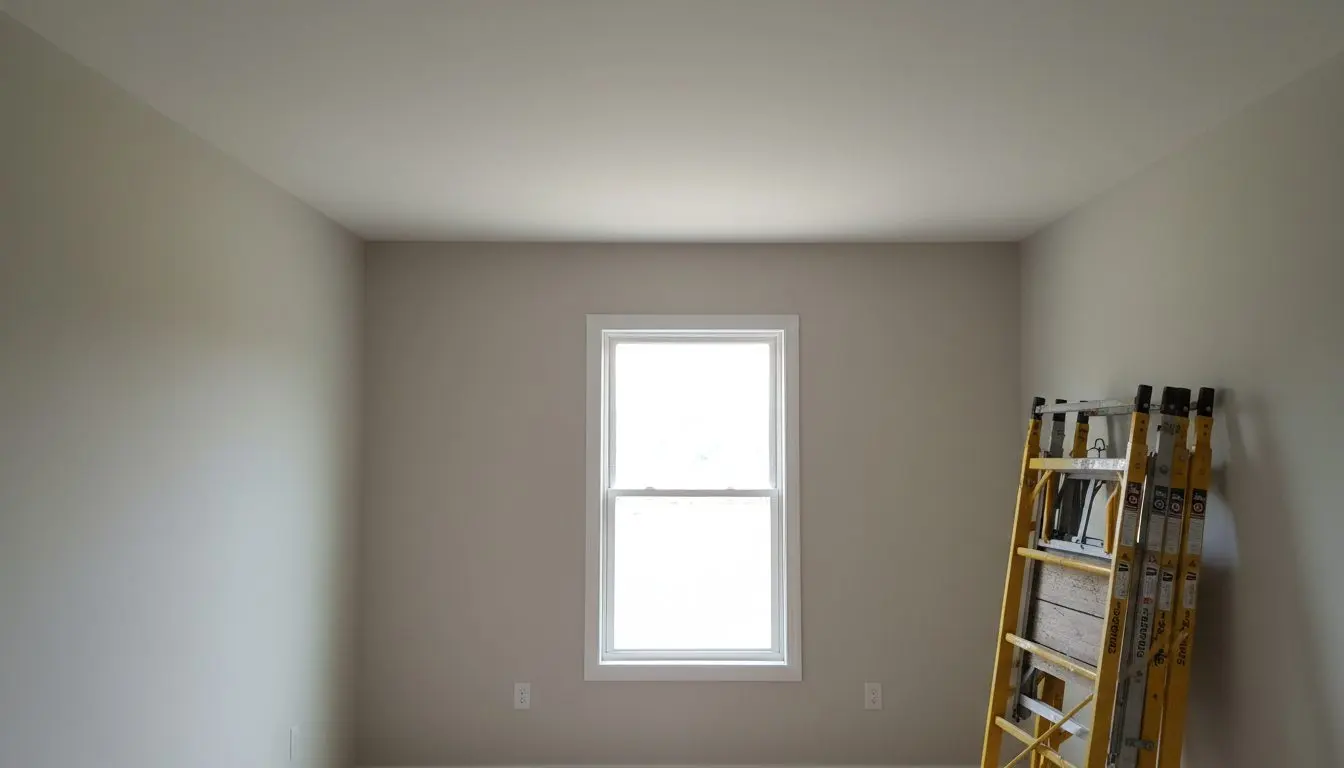
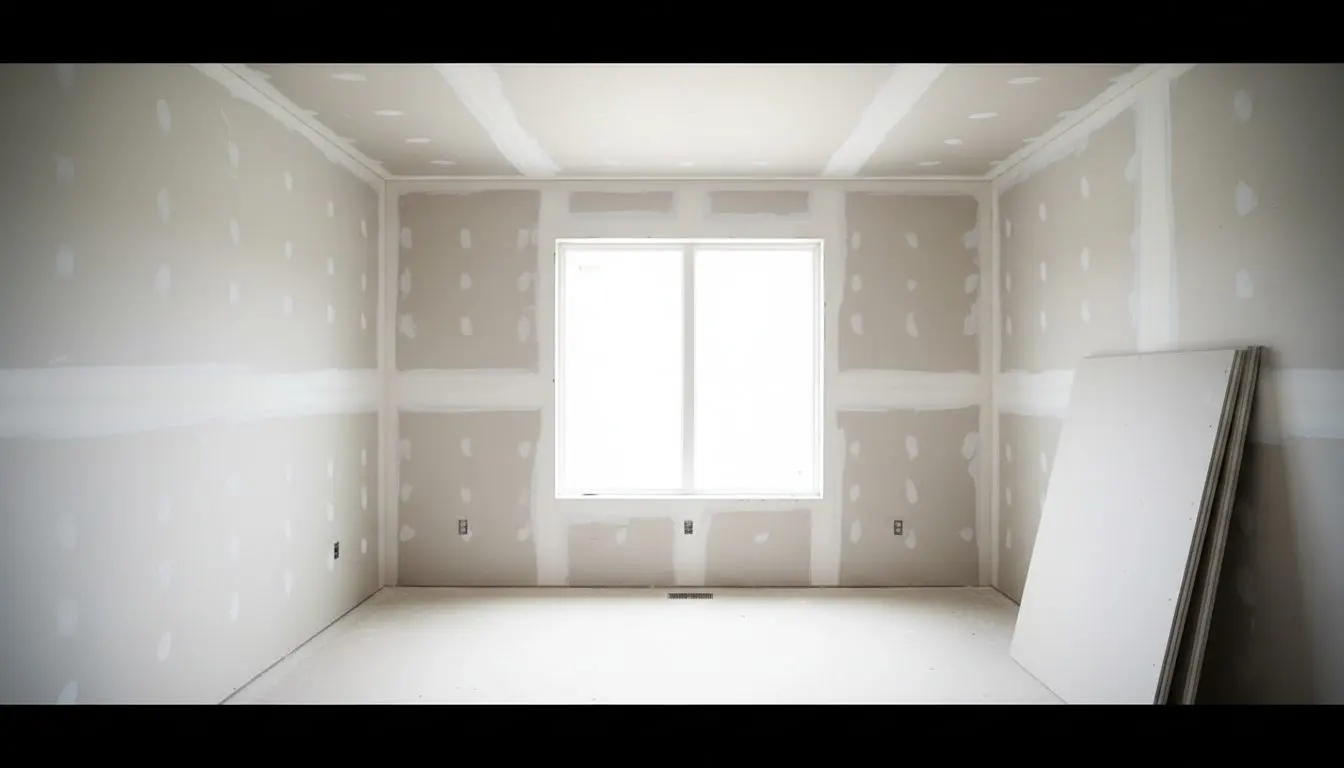
  • A bedroom in an addition with the board just hung and the first coat of compound on the joints, one wall still showing screw lines

    Drywall Installation

    For anybody who has framing standing and nothing on it yet. Builders come here with a spec house and a closing date, and homeowners come here with an attic, a garage or an addition that has reached the point where it needs walls. What people pick it for is the part before the board goes up, which is the string line across the studs and an honest answer about whether the lumber is dry enough to cover.

    Learn more about Drywall Installation
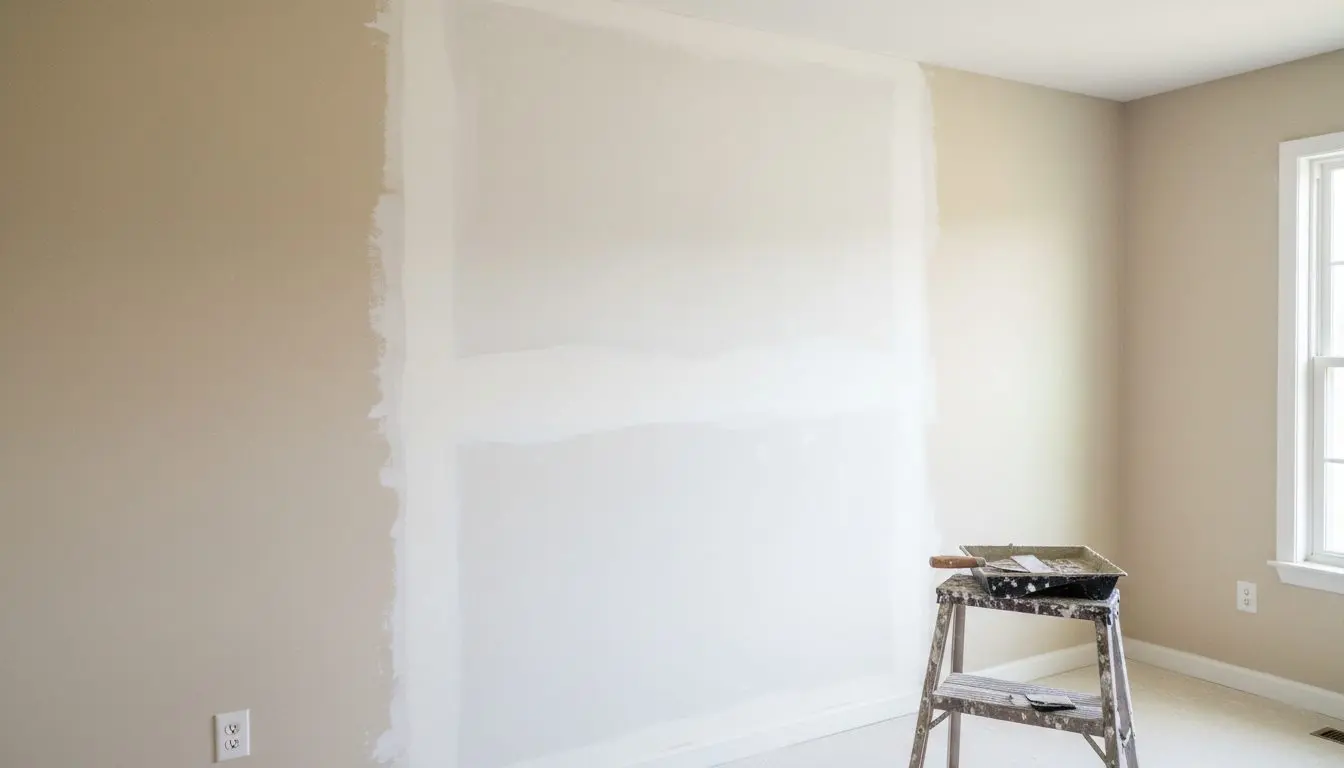
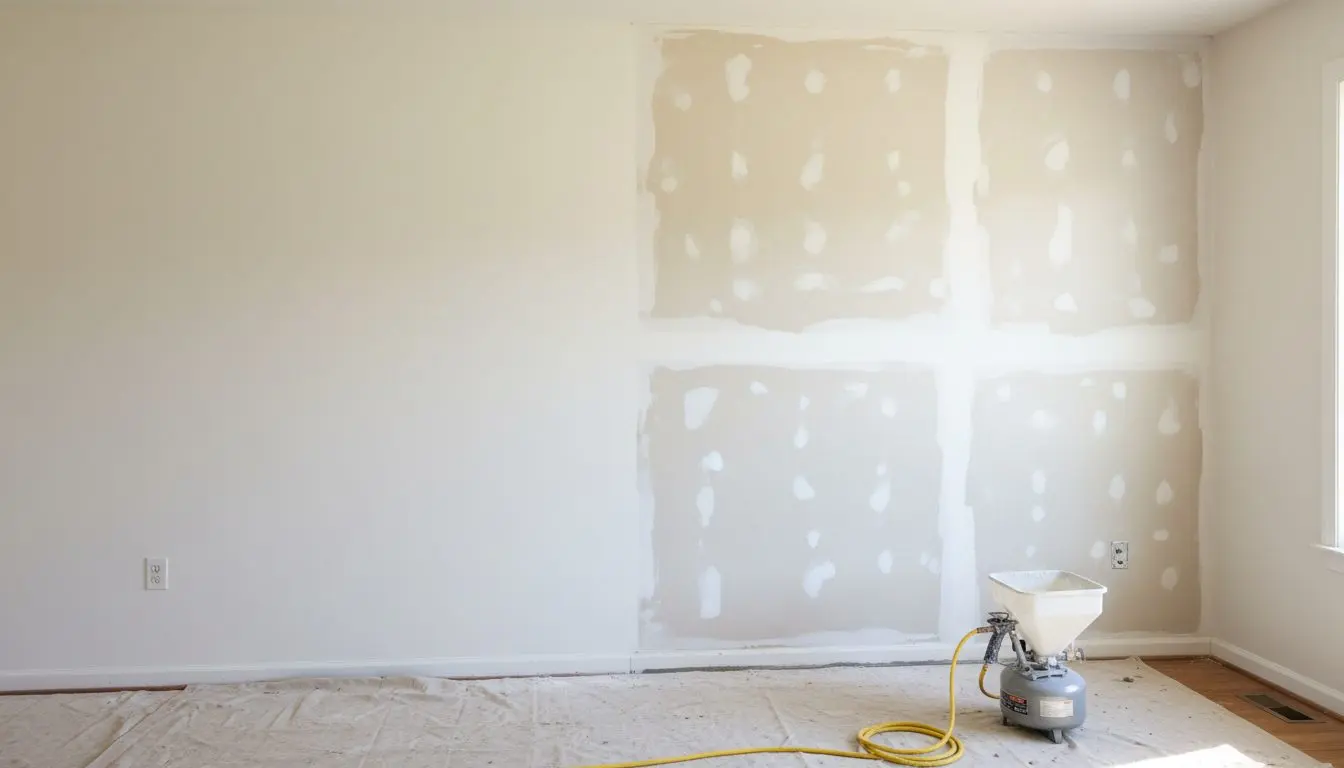
  • A living room wall with a finished repair in the middle of it, primed and blending into the older painted surface either side

    Drywall Repair

    For anybody looking at damage they have stopped seeing and a buyer would notice immediately. Landlords call between tenants, homeowners call the week before family arrive, and people call after a mover has clipped a corner. What makes people pick it is the texture matching, because that is the part that decides whether a repair reads as a repair or as a wall.

    Learn more about Drywall Repair
  • A living room wall part way through a knockdown texture, one half sprayed and drawn flat and the other half still smooth primer

    Texture and Finishing

    For anybody looking at a wall where one patch of texture does not match the rest, and for anybody tired of knockdown in every room. Plumbers leave a stripe of fresh mud behind them, builders need a new house to match the four either side, and owners of nineties houses want the walls flat. What people pick it for is the test board, sprayed and drawn in front of you before anything goes near your wall.

    Learn more about Texture and Finishing
  • A finished bedroom ceiling seen from below, smooth and primed with no joint lines in it

    Ceilings

    For anybody who has stopped looking up. Owners of 1960s and 1970s ranches call when the popcorn has to go before a house is listed, and landlords call when a ceiling has started to bow between the joists over somebody's bed. What people pick it for is the mess, or rather the handling of it. The room is sealed, the texture comes off wet instead of as dust, and the waste is bagged and gone the same day.

    Learn more about Ceilings
  • A bedroom wall and ceiling corner put back after a leak, primed and blending into the older painted surface around it

    Water Damage Repair

    For anybody standing under a stain that was not there last week, and for anybody with a wall that gives under a thumb. Homeowners call the morning after a storm, and landlords call when a tenant reports a bulge under a bathroom. What people pick it for is the meter. The wall goes back on two readings a day apart rather than on somebody's opinion that it feels dry, and the numbers come to you in writing.

    Learn more about Water Damage Repair

From your first call to a room that is ready for paint

Three to seven days on site for most rooms, and the dusty half of it is done inside the first two.

  1. You call and describe it

    Same day callback

    Tell us the room, roughly how big it is and what went wrong. A photograph from your phone saves a visit's worth of guessing, and you get a straight answer about whether the job is a morning or a week.

  2. A measure at the house

    Within two working days

    We measure the board area, look at what is behind the old surface and put a light in the crawl space if damp is any part of the story. The visit costs nothing and nothing is left for you to work out afterwards.

  3. A written quote, itemized

    Next day, by email

    The quote names the board, the finish level and the number of days on site. Where two ways of doing it both make sense, both are priced, so you can see what the difference actually buys you.

  4. Board goes up and is taped

    One to three days

    Furniture is sheeted, doorways are zipped and floors are covered before anything is cut. Then the sheets go up, get screwed off and taped, and the first coat of compound goes on. This is the loud part.

  5. Coats, then sanding

    Two to four days

    Every coat has to be dry before the next one goes over it, and in a Carolina July that takes longer than the bag says. We build those days in rather than shut moisture under a finish.

  6. We clean up and take it away

    Half a day

    Scrap, sheeting and the bagged sanding waste leave with the crew. You get the room back swept and vacuumed and ready for primer, and somebody walks it with you before the van goes.

Tell us which room it is and somebody comes out and measures it, free, and puts the days on paper before you commit to anything.

Get a free quote

What moves the price on a drywall quote?

Two rooms of the same size can quote a long way apart. What separates them is what sits behind the old surface and how good the finish has to be, and neither is visible from a doorway.

Board area, not room count
Quoting runs off the square footage of board and the number of cuts around windows, doors and returns. A small room chopped up by openings can carry more board work in it than a large plain one.
Level of finish
A garage getting one coat of paint stops at Level 3. A hallway with a window throwing light down it wants Level 5, which is a skim over the whole face and roughly another day of sanding per room.
Ceiling height and access
Anything above a comfortable reach means staging, two pairs of hands on every sheet and slower taping overhead. Stairwells and vaulted rooms cost far more in labor than they ever do in board.
What is behind the old surface
Until a sheet comes off, nobody knows whether the framing is straight, whether old wiring is stapled across it or whether the insulation is wet. Anything found there is priced when it is found.
Humidity and drying days
Compound gives its water up to the air, and from June the air here is already carrying all it can hold. A job that closes in four days in March can want six in August unless fans and a dehumidifier run.
Texture matching
Matching an existing knockdown or orange peel across a patch is slower than texturing a bare wall, because the gun has to be tuned to a setting somebody else chose thirty years ago.

Which of these actually apply to your job gets settled on the visit rather than on the phone, and it is written down before anybody starts. Get a free quote

FAQs

Frequently asked questions

What people ask before they let a crew into the house

What do I need to move out before the crew arrives?

Anything breakable, and anything you would rather not vacuum afterwards. Furniture too heavy to shift gets pushed to the middle and sheeted by the crew on the first morning, but lamps, pictures, curtains and whatever is on a shelf are better off in another room. Carpet stays down and gets covered.

Will the sanding dust get into the air conditioning?

Not if the vents are dealt with first, and that is the first thing the crew does. Every supply and return inside the work area gets taped over before sanding starts, because an air handler pulling out of that room will carry fine dust into every other room in the house in an afternoon.

What hours will the crew actually be in the house?

Half seven to about four, Monday to Friday, and the van is usually gone before the school run gets back. Lunch is taken on site rather than by everybody leaving and coming back, and if a coat needs looking at in the evening that is one man for ten minutes, not the whole crew again.

Is it safe to keep pets in the house while you sand?

Cats and dogs are fine at the other end of the house with the doors shut, and better out altogether on the sanding day. Fine gypsum dust irritates an animal's eyes and nose the way it does yours, and a dog that pushes through a zip wall walks wet compound through the rest of your house.

Will you need our bathroom, our water or our power?

Power yes, water usually, and the bathroom only if you offer it. Buckets get filled from an outside spigot where there is one, and the crew brings its own drinking water. Sanders and mixers run off ordinary outlets, and somebody will ask which circuit rather than trip the breaker on your freezer.

Can you pause the job if we have people staying?

Yes, as long as we know before the week starts. A job stops cleanly at the end of a coat, and the room can be left dust free and walkable while your visitors are here. What cannot happen is stopping halfway through a sanding day, so tell the foreman on the Monday rather than on Wednesday night.

Why does this cost more than the same room in new construction?

Because a third of the work in an occupied house is not drywall at all. Covering floors from the door in, sheeting furniture, sealing the room, carrying board through a finished hallway and cleaning up at the end of every day are all hours nobody spends inside an empty shell with the doors off.

How soon can furniture go back against a finished wall?

Give it a day after the primer coat before anything heavy goes back, and longer than that in July. Primer over compound that is dry to the touch is not dry the whole way through, and a bookcase pushed tight against it traps the last of the water and leaves a dull rectangle on the wall.

Do you work Saturdays if we are both out all week?

Yes, and it costs the same as a weekday. Saturdays suit repair work in houses where nobody is home in the week, and they suit the drying schedule as well, because a coat that goes on Saturday morning has the whole of Sunday to give up its water before anybody touches it again.

Is the smell of the compound anything to worry about?

It is low odour and it is not solvent based. Ready mixed joint compound is gypsum, water and a binder, so what you smell in a closed up room in August is damp rather than chemicals. Anybody with asthma should still be out on the sanding day, because the dust is the part that bothers people.

Who do I call if something in the house gets damaged?

Call the foreman first and then the office, the same day if you can. A scuffed stair rail or a chipped baseboard from a sheet coming through a narrow hallway is ours to put right, and it is what the liability cover is there for. What nobody here does is quietly touch it in and say nothing.

Do you work on manufactured and mobile homes?

Yes for repairs, with one thing worth knowing first. Many manufactured homes have thin gypsum panels with battened joints rather than taped ones, so a patch gets matched to the panel and the batten instead of finished flat. Where the ceiling is a vinyl faced board we say up front what will blend.

Greenville Drywall Elite

The book runs two to three weeks ahead, so most rooms start inside the month.

Greenville Drywall Elite hangs, tapes, finishes and textures board across Greenville and the mill towns and new subdivisions around it, from crawl-space repairs to whole rooms hung from scratch. Four crews finish a little over two hundred and twenty jobs a year, residential and commercial alike. Trading here since 2013.

Why Greenville homeowners keep calling us back

  • Thirteen years hanging houses across the Upstate, trading since 2013
  • The measure is free and the quote is itemized, line by line
  • Damp is checked at the crawl space first, not guessed at from the stain on the wall
  • Coats are timed to Carolina drying days rather than rushed to meet a schedule
  • The room is swept and vacuumed before anybody calls the job finished

If a baseboard is stained from the crawl space, a ceiling needs drywall, or a room needs finishing from scratch, call (864) 555-0119 and somebody will come out and measure it for free. The quote is itemized so you can see what each part of the job costs, and the coats are timed to the weather rather than rushed.

(864) 555-0119

Give us a call

141 Traction St, Greenville, SC, 29611

Where to find us

Get an itemized quote

(864) 555-0119 Get a free quote