
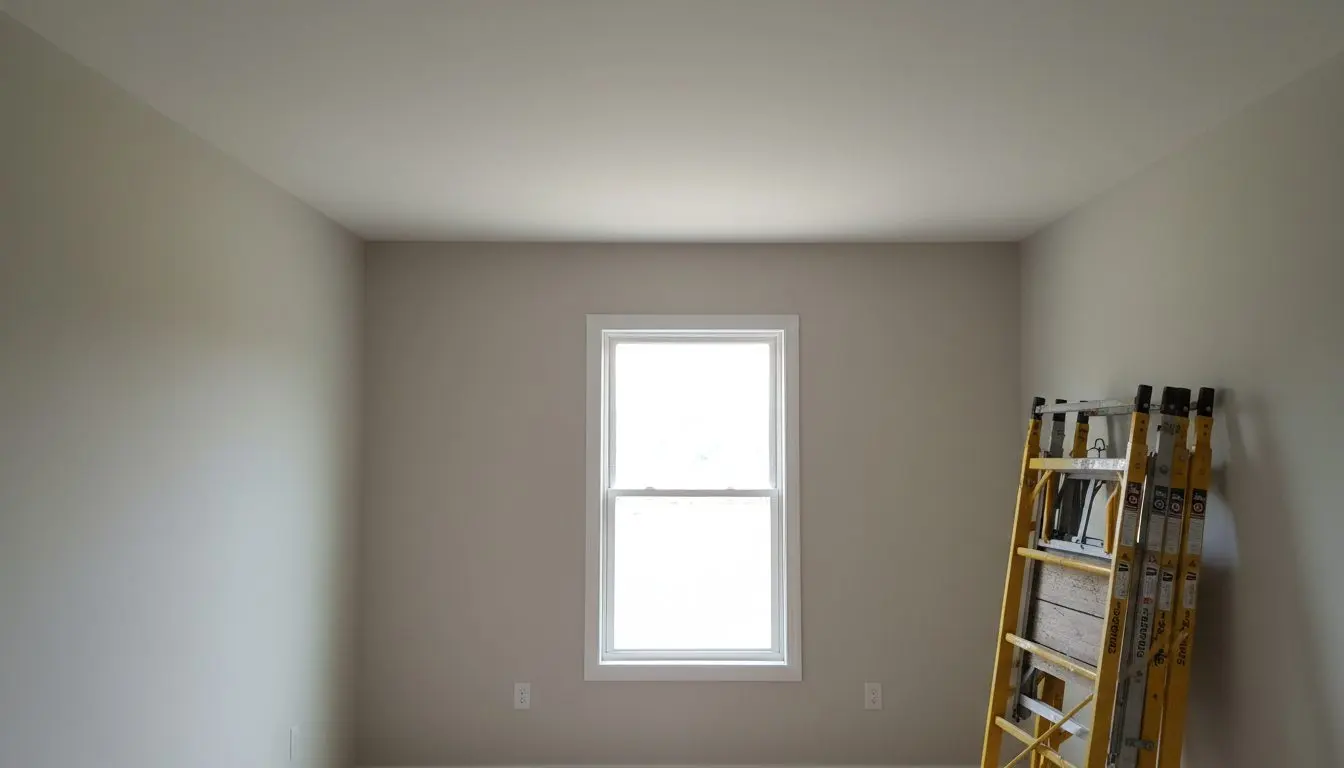
Ceilings in Greenville
Ceilings hung, skimmed and taken flat in Greenville
Five eighths board on every ceiling, popcorn taken off wet with the room sealed, and the finished plane read under a light on a pole rather than by eye from below.
Anything overhead, from popcorn to a twenty foot vault
You end up with a ceiling that reads flat from the doorway with a lamp on, and no line where the old surface stopped.
This is anything overhead. Popcorn scraped off and skimmed flat, new ceilings in additions, sagging plaster screwed back or taken down, vaults and trays, and soffits boxing in ductwork. If the ceiling is stained or has been wet, start at water damage repair, because that job begins with drying. One hole in an otherwise sound ceiling is drywall repair.
Ceilings run at about twenty jobs a year on their own, and roughly half of those are popcorn coming off 1960s and 1970s houses across the Upstate.
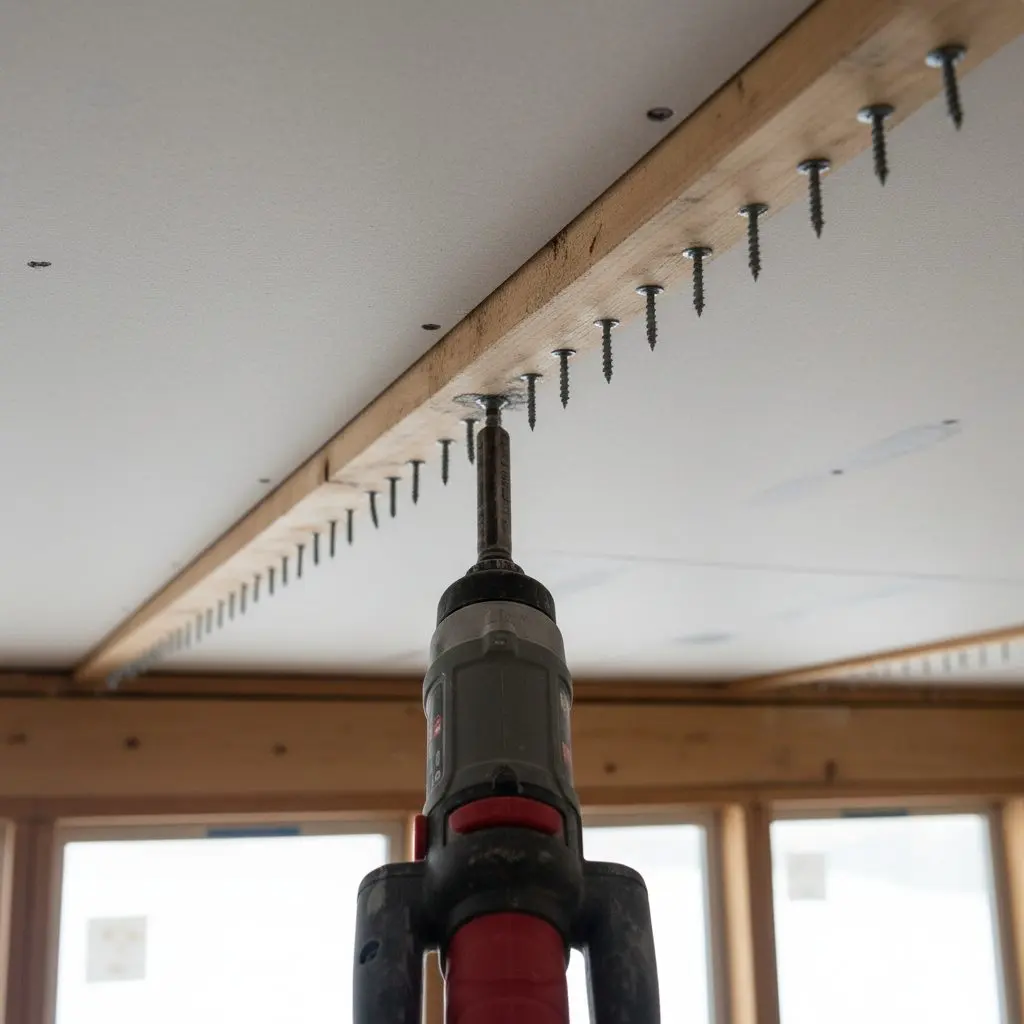
Most of it is popcorn removal and the skim that follows it. Then new board to additions and bonus rooms, sagging plaster screwed back or replaced, vaulted and tray ceilings, and soffits boxed around ducts and beams. Every ceiling takes five eighths board rather than the half inch that goes on walls, screwed at twelve inches, because half inch spans joists at twenty four inch centers and sags between them. That sag is what shows as a wave the first time somebody puts a lamp under it.
Homeowners call when the popcorn in a 1972 ranch has to go before the house is listed, and landlords call when a ceiling has started to bow between the joists over a tenant's bed.
Call for a free ceiling check at (864) 555-0119. You go from noticing that sag every time you lie down to never looking up in that room again!
What a ceiling price covers, sheeting to vacuuming
A ceiling job here includes sealing the room and bagging the mess out, which is most of what makes one bearable.
- Room sheeted and doorways zipped first
- Popcorn wetted and scraped, never sanded off
- Five eighths board to new and replaced ceilings
- Sagging plaster screwed back to the joists
- Skim coat, sanded and read under a light
- Soffits and bulkheads boxed and finished
- Waste bagged out and floors vacuumed
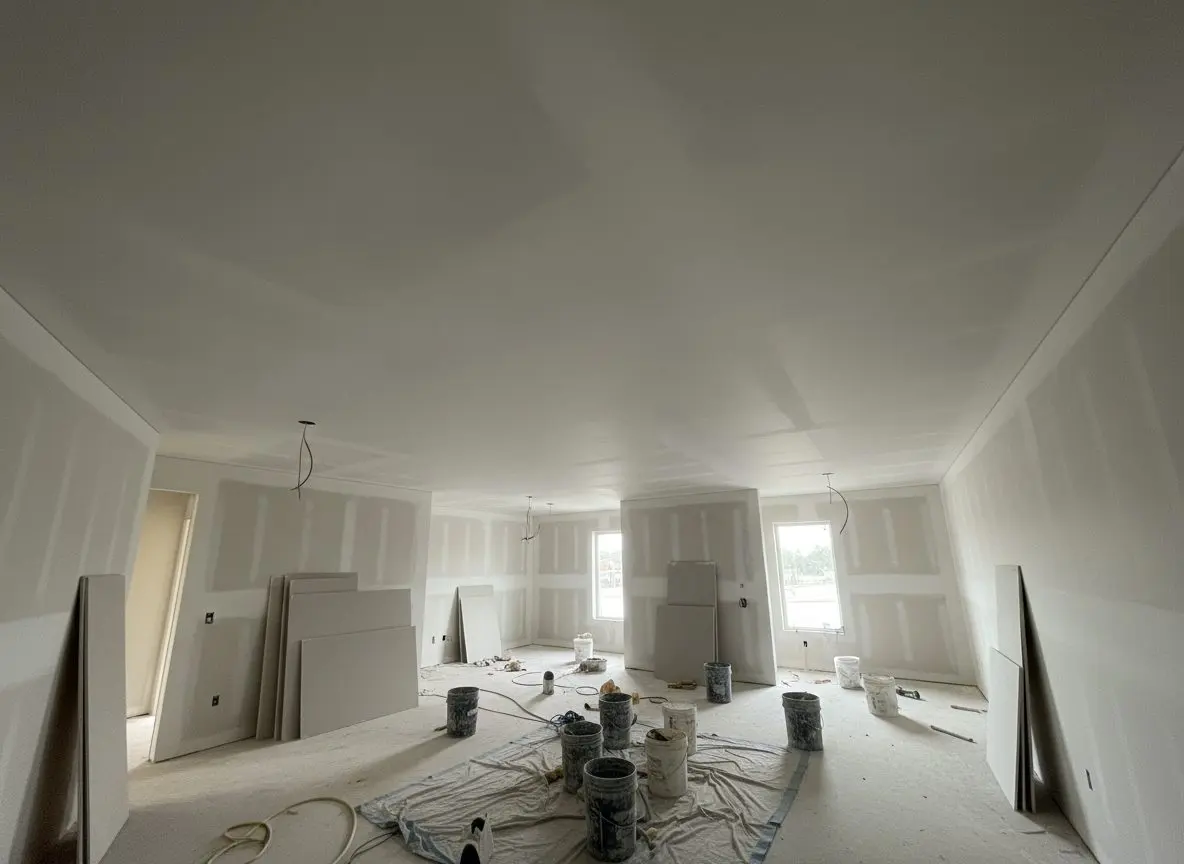
Scraping the popcorn off or hanging straight over it
Most popcorn ceilings come off wet in a day and never need a new sheet of board over them.
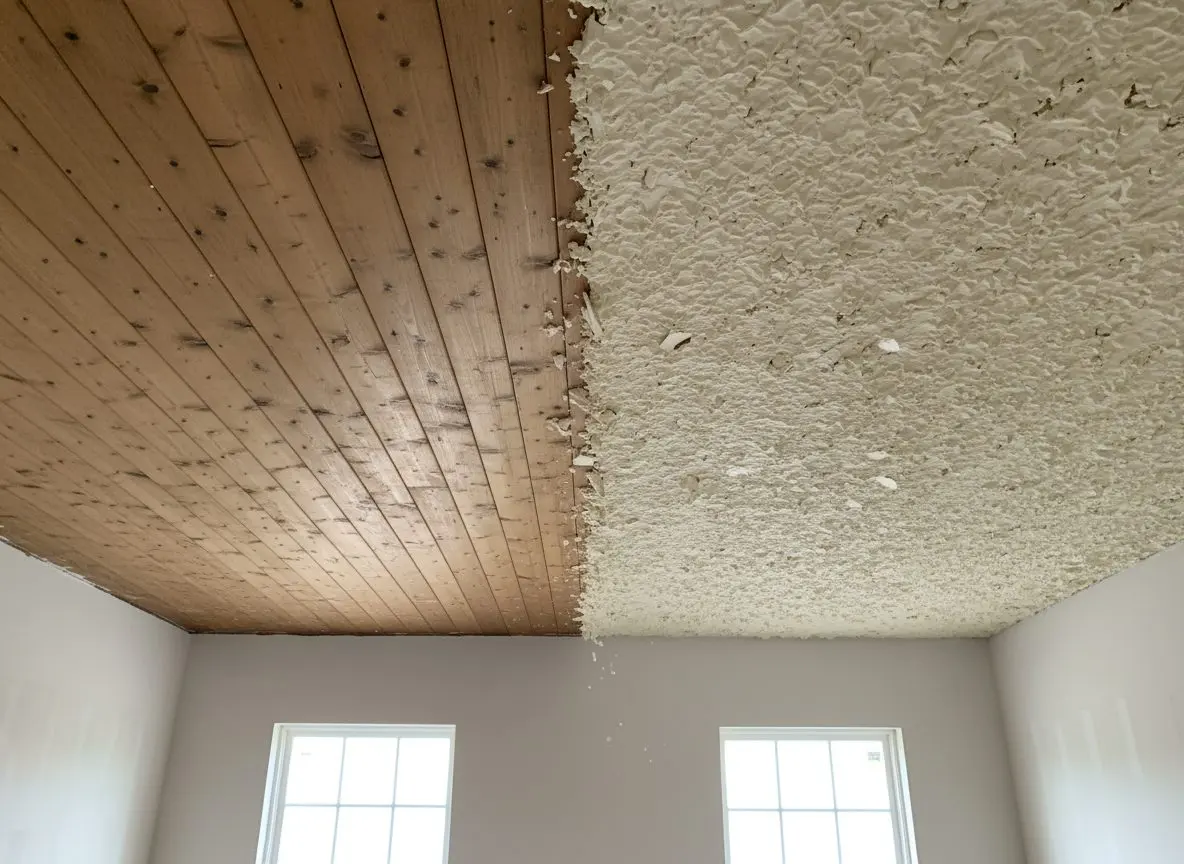
Scrape when the ceiling under it is sound board, when the texture has never been painted, and when the room can be cleared and sheeted. Unpainted popcorn takes water in about fifteen minutes and comes away in wet sheets, and what is left underneath needs a skim and a sand rather than anything new fixed to it.
Board over when the popcorn has been painted, when it is over plaster that has lost its keys, or when the surface is stained from something above. Painted texture sheds water instead of taking it, so scraping turns into chiselling, and a quarter inch sheet screwed into the joists is faster and flatter.
We wet a square foot of it on the visit and tell you which of the two it is, including when it is the scrape, which invoices for less than half of the other. Fifteen minutes with a sprayer and a blade settles a question people spend two weeks reading about online.
Five eighths overhead, and what else we hold to
Five eighths board on every ceiling, screwed at twelve inches, and popcorn taken off wet rather than sanded.
Ceilings take five eighths board rather than the half inch that goes on walls, because half inch spans joists at twenty four inch centers and sags between them.
Screws go in at twelve inches overhead against sixteen on a wall, dimpled into the paper and never through it. Butt joints are back blocked so the raised ridge does not read down the room when a lamp is on.
Popcorn is wetted with a garden sprayer and scraped, not sanded, so what comes off is wet and lands on the sheeting instead of traveling the house, and anything sprayed before about 1980 goes to a lab for testing before a scraper touches it. The finished plane is read with a light on a pole rather than by eye from below.
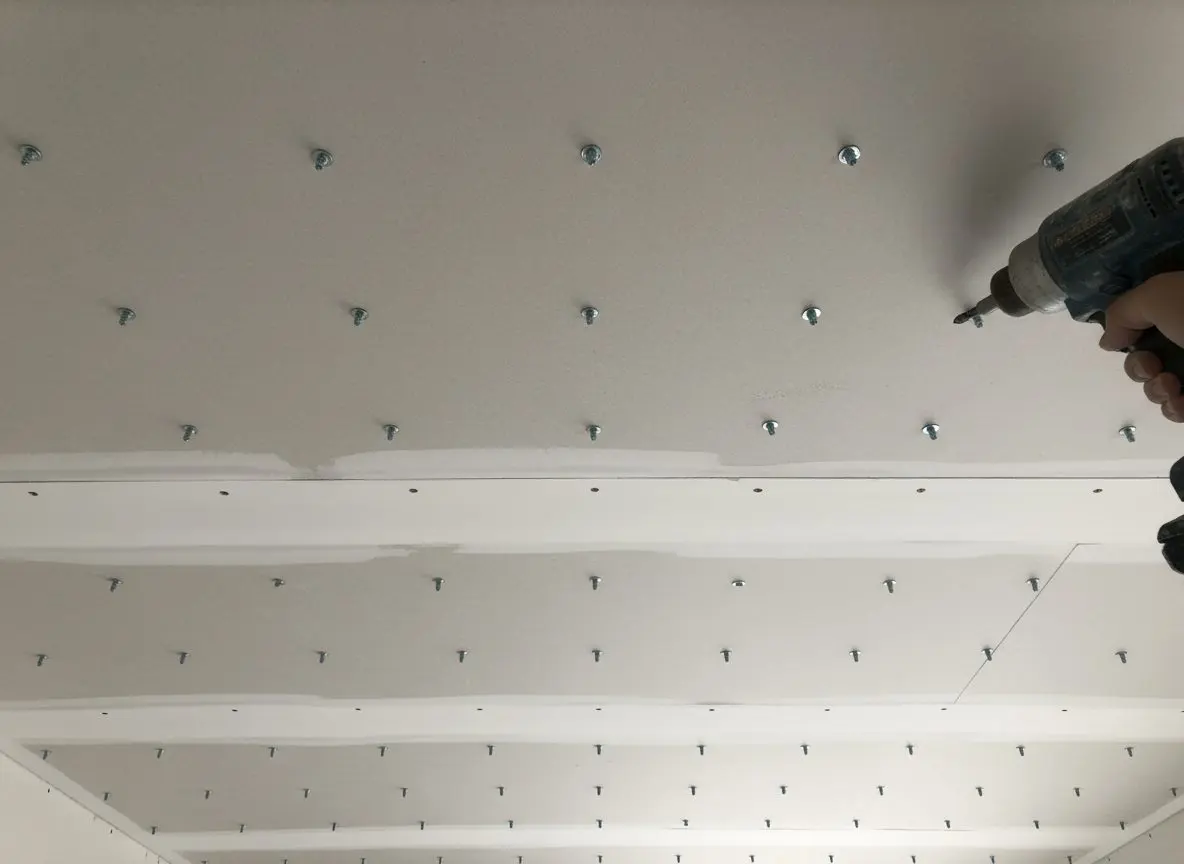
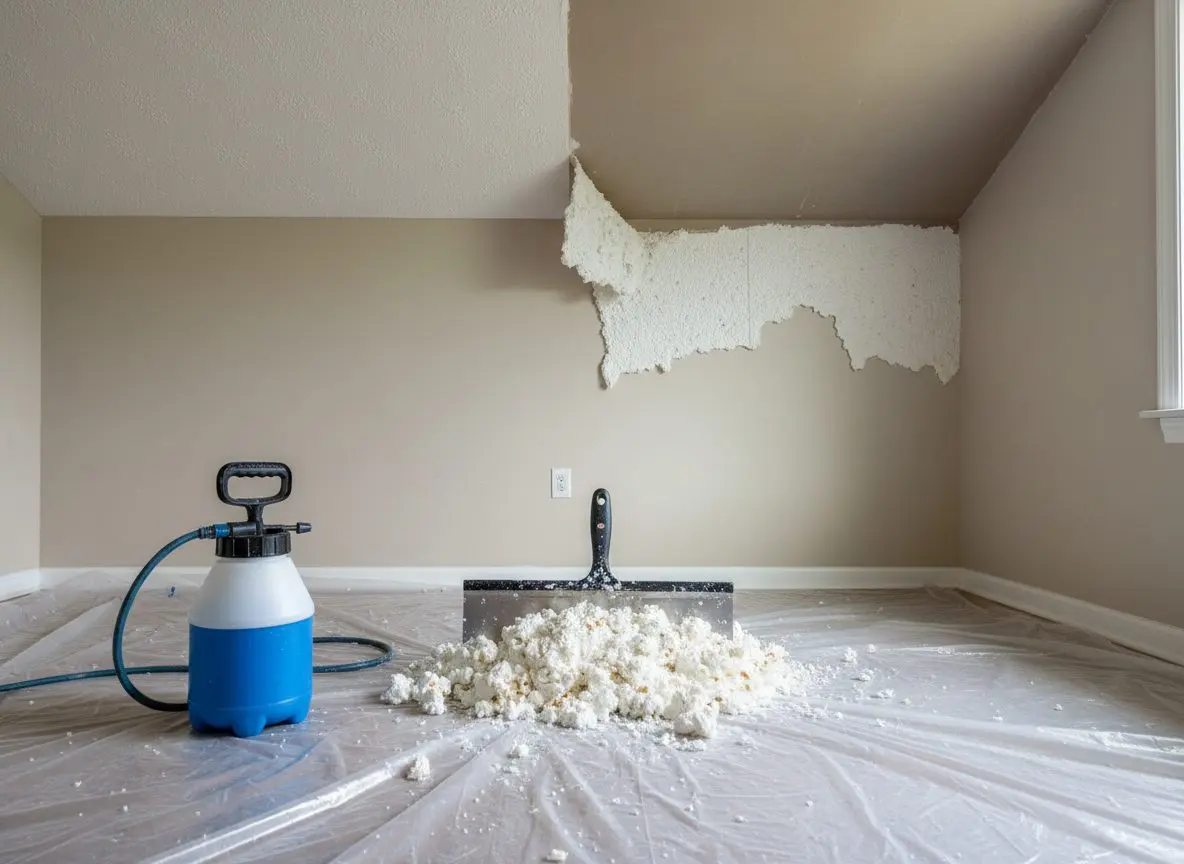
- Five eighths board on every ceiling
- Twelve inch screw spacing overhead
- Butt joints back blocked across the room
- Popcorn wetted and scraped, never sanded
- Pre 1980 texture lab tested before removal
- Finished plane read under a light on a pole
Ask whoever else quotes whether the old texture gets tested before it comes down, then call and ask us.
(864) 555-0119What changes the number on ceiling work
Two ceilings of the same square footage can be days apart. Overhead, the number follows what is already up there, how high it is, and whether the room underneath can be emptied.
- Whether the popcorn was painted
- Unpainted texture takes water and comes off in wet sheets in a morning. Painted popcorn sheds water, so it has to be chipped off dry or drywalled over, and either is a different job from the one people expect.
- Height, and what you stand on
- An eight foot ceiling is worked off a bench. A stairwell landing or an eighteen foot vault means staging built, moved and struck for every coat, and every coat up there is its own visit with two people on it.
- What is fixed to the ceiling
- Fans, can lights, vents, alarms and a chandelier all come down and go back, and anything being relocated wants an electrician between our two visits. A plain ceiling with one fitting on it is the quick version.
- Emptying the room
- A ceiling job puts everything below it under sheeting, so a cleared room runs faster and cleaner than one full of furniture. Kitchens are the slow ones, because the cabinets and counters stay where they are.
- Testing before it comes down
- Anything sprayed before 1980 goes to a lab first, and that is a sample, a lab charge and two days in the schedule. It is small next to the alternative, which is finding out afterwards and telling a buyer.
- What is found above the board
- A ceiling coming down is the one chance to see the insulation over it. Putting batts back properly adds half a day, and leaving compressed or damp insulation costs you the same ceiling again in a few years.
Which of these apply is obvious once somebody has stood under it with a light, which is why the visit is free and the quote is written before anything comes down. Get a free quote
From your first call to a room that is ready for paint
Three to seven days on site for most rooms, and the dusty half of it is done inside the first two.
Tell us which room it is and somebody comes out and measures it, free, and puts the days on paper before you commit to anything.
Get a free quotePopcorn, a lab result and what a buyer does with both
Popcorn is the first thing a buyer here dates the house by, and among the cheapest things to change.
No published report prices a ceiling on its own. The Cost vs Value report from Remodeling magazine measures whole projects, so a South Atlantic attic conversion or bath remodel arrives as one number with the framing, the wiring and the finishing inside it, and any percentage quoted for popcorn removal has been made up.
What is worth saying is which parts of a ceiling job you cannot revisit. Board thickness and screw spacing are settled the day it goes up, and so is whether the old texture was tested before it came down.
A lab result in writing is what a buyer's inspector asks for in a 1970s house here, and it costs almost nothing at the time and a negotiation later.

Still air, crawl space damp and untested popcorn
Overhead coats hold their water longest in July, warm crawl space air collects against a cold ceiling, and nearly every ranch here still carries untested 1970s popcorn.
- A skimmed ceiling dries slower than a wall
- The air under a ceiling is the stillest in the room, so overhead coats hold their water longer than the same coat on a wall. A skim that sands on Wednesday in March wants until Friday in August, and a dehumidifier runs rather than anyone guessing.
- The moisture arrives from the crawl space
- Houses here sit over crawl spaces rather than basements, so warm wet air rises through the floor and collects on the coldest surface. Ceilings under an unconditioned attic stain in bands along the joists, and that is a vapor problem, not a leak.
- Nearly every ranch here has untested popcorn
- The 1960s and 1970s stock around Taylors, Berea and Wade Hampton was sprayed with popcorn, and anything sprayed before 1980 can carry asbestos in the aggregate. A sample goes to a lab before a scraper touches it, which is two days, not two weeks.
Ceilings we have finished from Taylors to Mauldin
Six ceilings finished in the last year in real houses across the Upstate. Each card names the thing that made that one different.
-
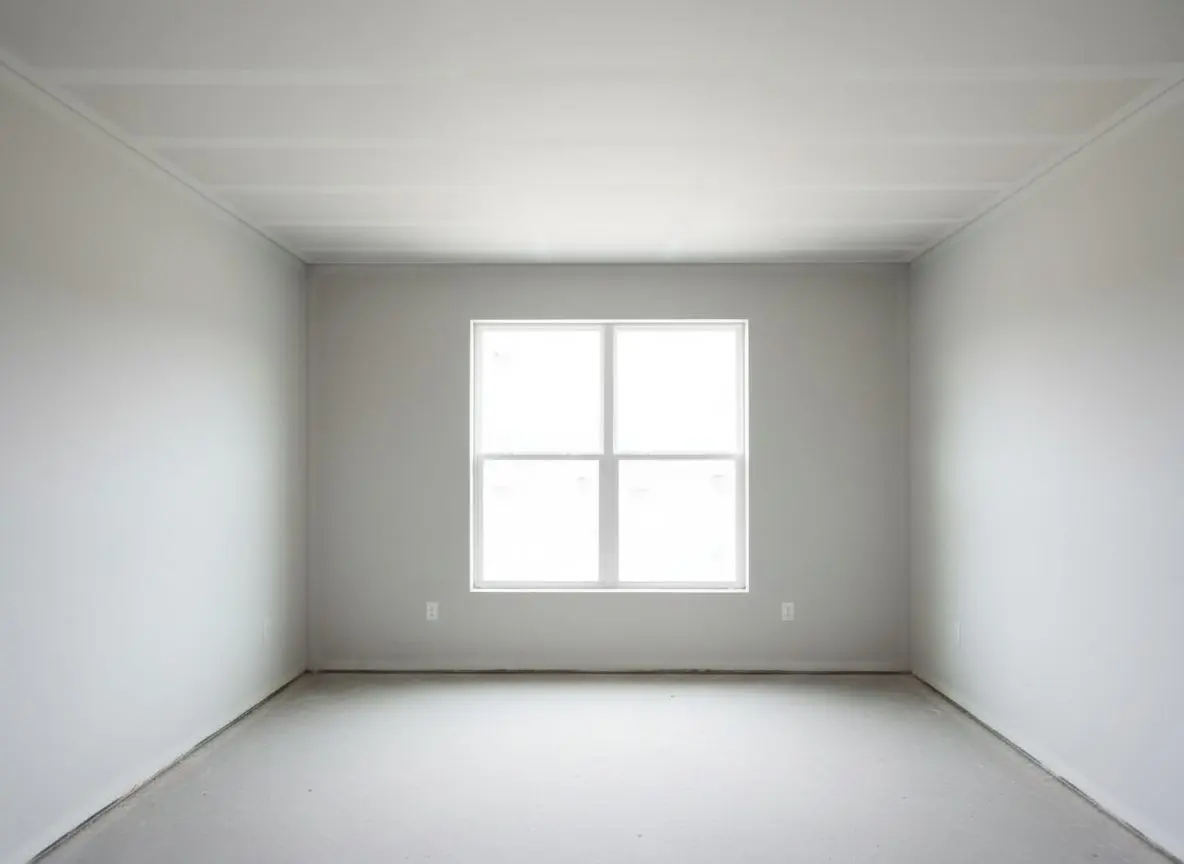
Popcorn off a 1972 ranch
Taylors
Nine hundred square feet across five rooms, wetted and scraped in two days once the sample came back clear, then skimmed flat and primed.
-
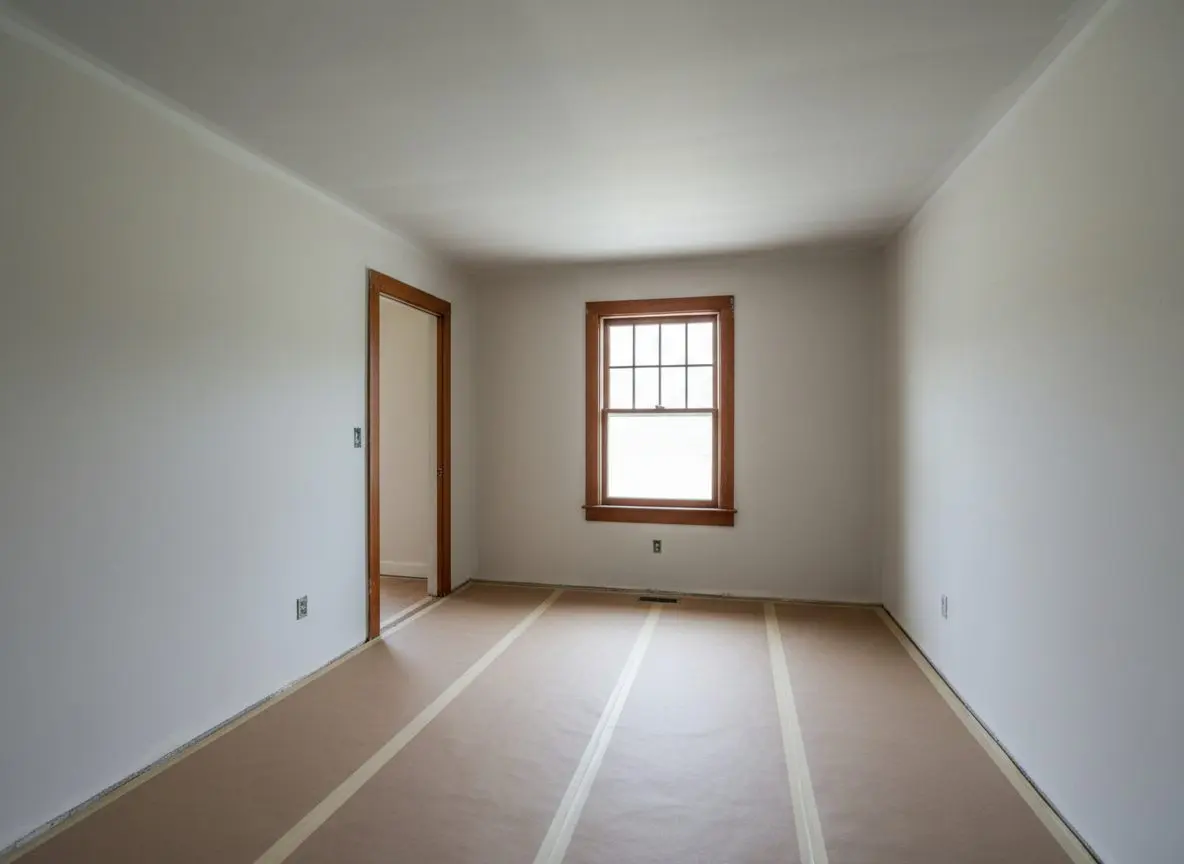
Sagging plaster ceiling saved
North Main
A 1926 bedroom ceiling that had lost its keys over half its area. Screwed back through plaster washers and skimmed rather than pulled down.
-
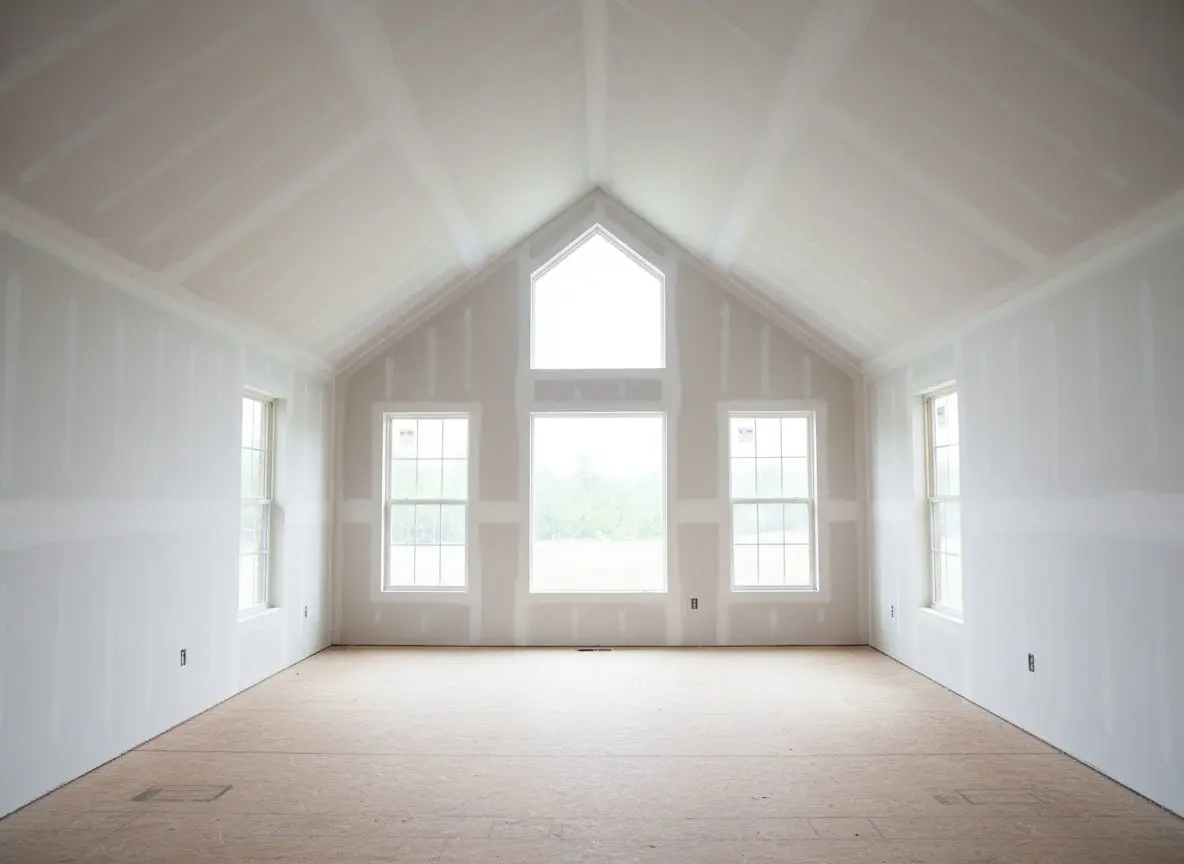
Vaulted ceiling in new construction
Five Forks
A twenty two foot vault hung in five eighths off rolling staging, with every butt joint back blocked so nothing reads from the floor below.
-
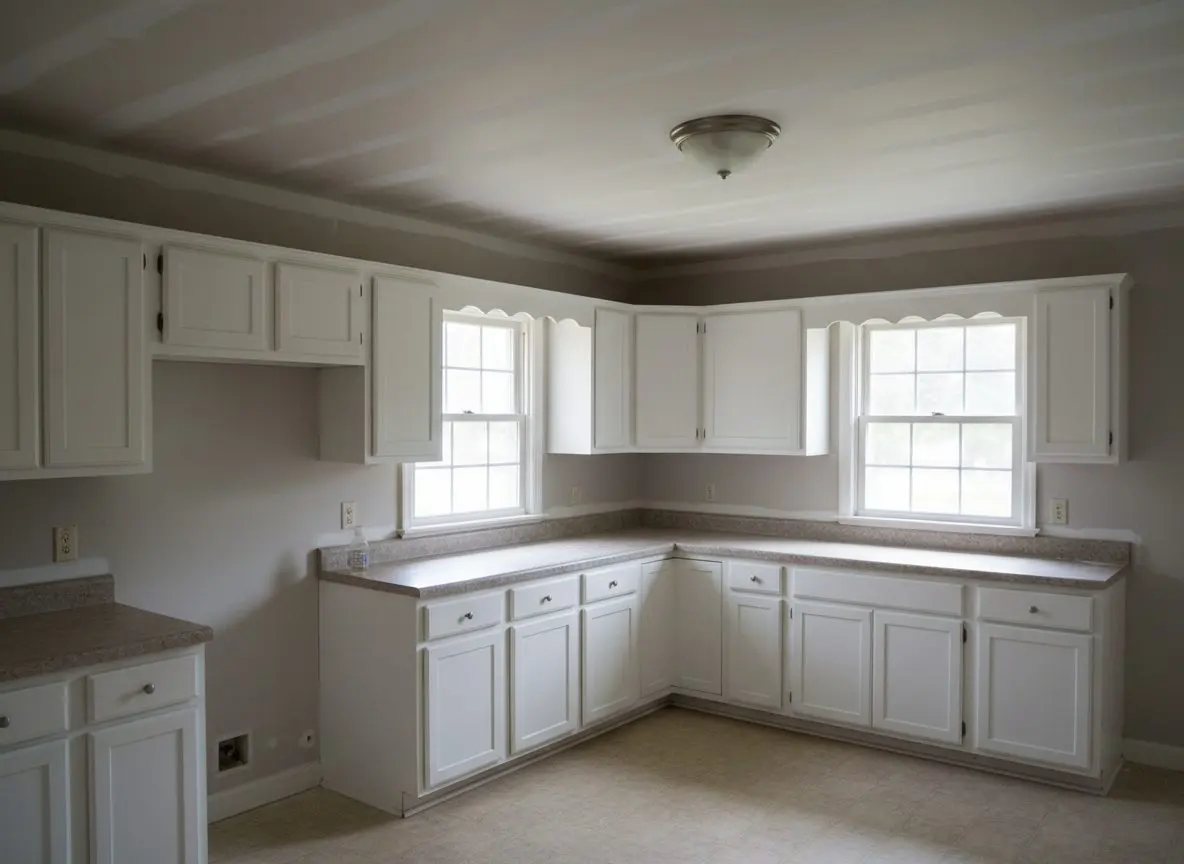
Kitchen ceiling with cabinets
Augusta Road
Popcorn off around fitted cabinets and a run of counters that could not move, sheeted in stages so the kitchen was usable each evening.
-
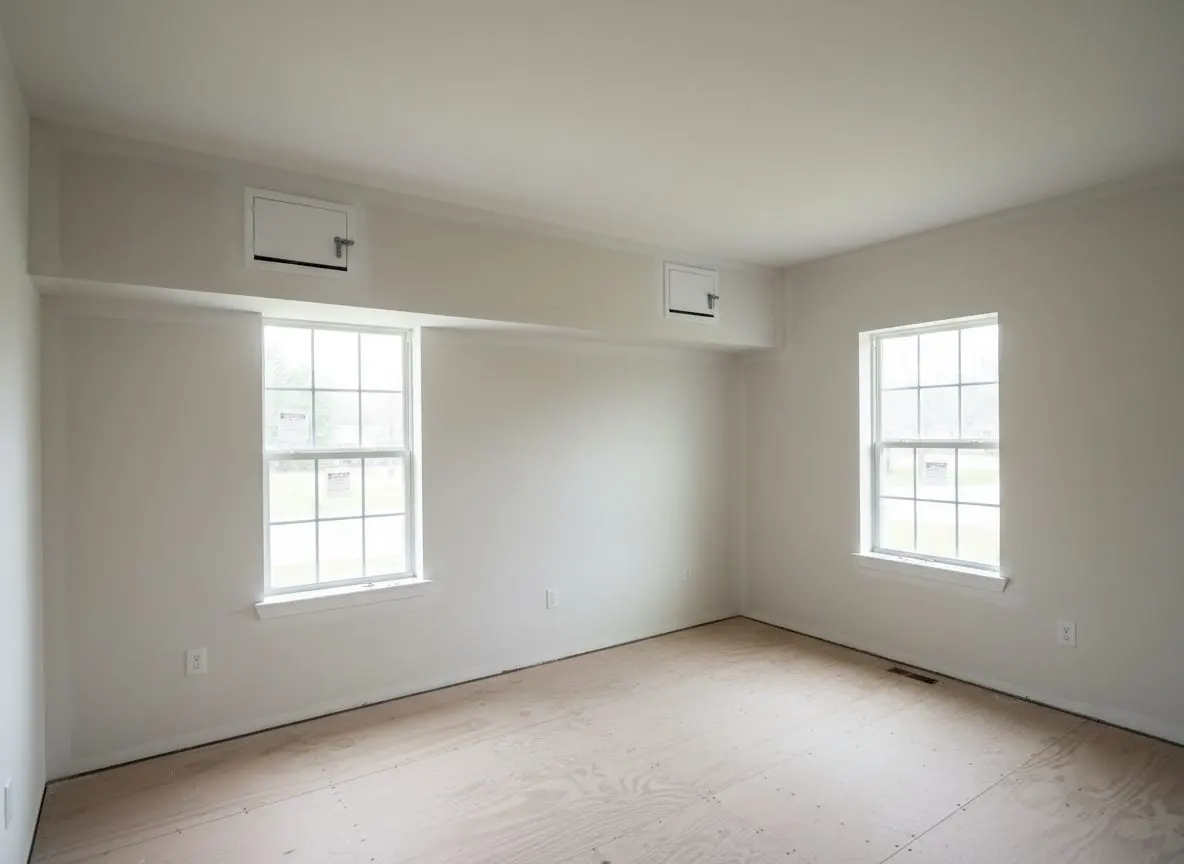
Soffits boxed around new ducts
Mauldin
A ground floor HVAC run boxed in and finished, with access hatches let into the boxing over the two dampers so nothing has to be cut later.
-
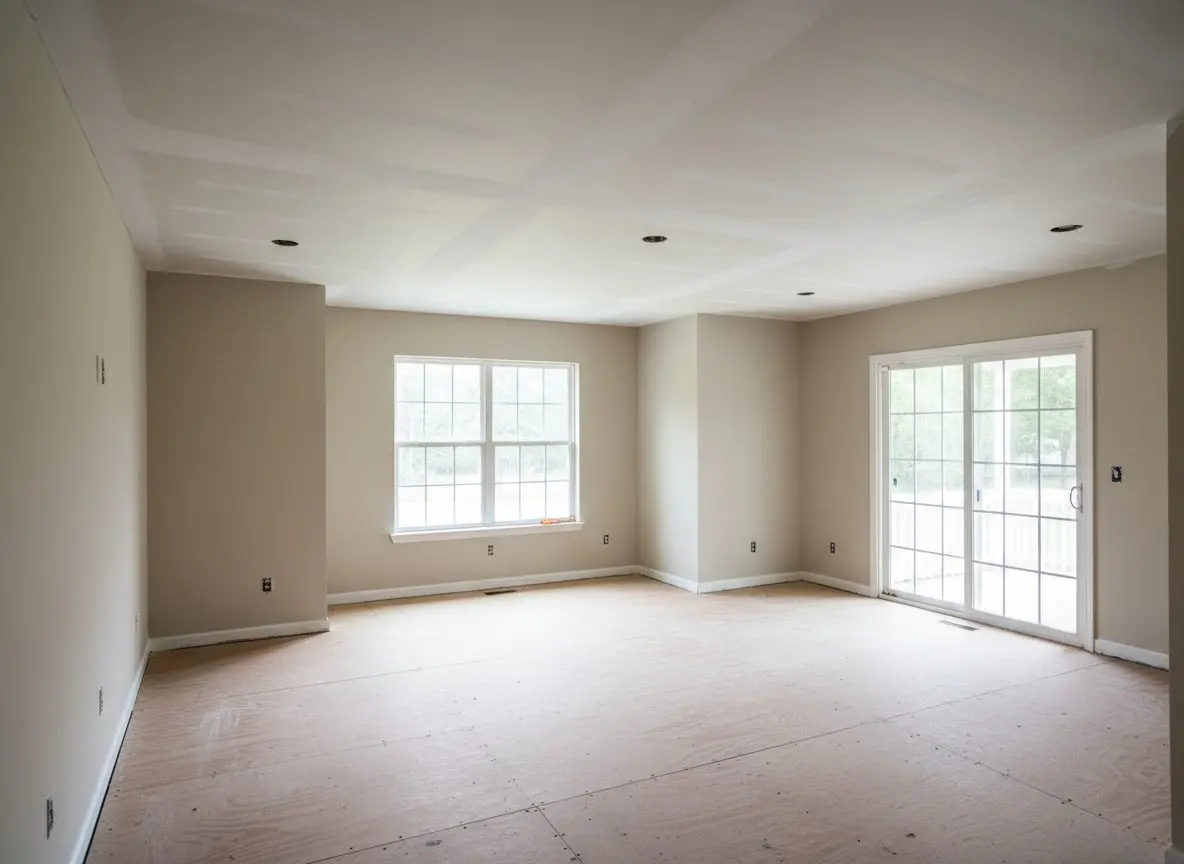
Three ceilings furred flat
Simpsonville
A 1980s house whose joists ran out by an inch across the room. Furring strips shimmed to a laser line before any board went up.
What people said after they stopped looking up
-
Rated 5 out of 5
Screw pops all over the upstairs of a 2022 build. They pulled the board back where the framing had moved rather than just filling them. None have come back.
Curtis B. Greer Drywall Repair -
Rated 5 out of 5
Garage into an office, and the boarding was the part I dreaded. August air meant the coats wanted two extra days, and they told me that on day one rather than at the end. It reads like a real room now.
Alicia N. Fountain Inn Drywall Installation -
Rated 5 out of 5
The house is from 1986 and every ceiling had popcorn. My realtor said leave it alone. Wes put a light up there and showed me the ripples underneath, so we did the den first to see. Flat now.
Bonnie H. Mauldin Ceilings
Reviews are easy to write and hard to check, so ask us for a finished job near you and go and look at it.
Get a free quoteFAQs
Frequently asked questions
What people ask before we touch a ceiling in Greenville
Is the popcorn in my house likely to contain asbestos?
If it was sprayed before about 1980, it might, and the only way to know is a lab. We take a small sample, seal it and send it, and the result comes back in about two days. If it is positive the work goes to a licensed abatement firm rather than to us, and we will say so plainly.
How long does one ceiling take from start to finish?
An ordinary bedroom ceiling is about four days in spring and closer to six in high summer, and only two of those are working days. Scraping is one morning, then the skim coats go on with drying between them. The room is sealed off from the first hour and stays that way until the vacuum comes out.
Can we live in the house while a ceiling comes down?
Yes, in every house but a one bedroom. The room being worked in is sealed at the doorway with plastic and the floor is sheeted twice, so what you lose is that room rather than the house. Scraping wet is the reason that works, because the texture lands on the sheeting instead of drifting.
Do I have to empty the room, or do you work around it?
Empty is faster and cheaper, and anything that leaves the room is one less thing to sheet twice. Where furniture cannot move it is stacked centrally and covered, and that is quoted as it is rather than found on the morning. Kitchens are the exception, since cabinets and counters obviously stay.
Will you save a sagging plaster ceiling or take it down?
Save it, where the plaster is still keyed to the lath over most of its area. It gets screwed back to the joists through plaster washers and then skimmed flat, which is quicker and far less mess than pulling it down. Where the keys have gone across a whole bay it comes down and goes back in board.
Can can lights go in while the ceiling is open?
That is the right moment for it, and we will coordinate with your electrician rather than doing the wiring ourselves. Cans, a relocated fan box and a moved vent all get cut and framed while the board is off, and we come back in once the rough in is signed off to close it up.
What are the dark lines showing along my ceiling?
That is ghosting, and it is soot and dust settling on the cold strips where the joists sit above the board. It points at thin insulation and moist air rather than at a leak, so cleaning or repainting fixes the look for a year and topping up the insulation fixes the cause.
Is a smooth ceiling harder to live with than popcorn?
It shows more, honestly. Popcorn was sprayed on to hide joist lines, joint ridges and a rough finish, so taking it off means the surface underneath has to be made properly flat. That is what the skim coat is for, and it is the part of the job that takes the days rather than the scraping.
Can you fix a ceiling where the joists are out of level?
Yes, by furring the whole ceiling down to a laser line before any board goes up. It costs a day and an inch of headroom, and it is the only thing that makes an old ceiling actually flat. Hanging straight onto joists that run out by an inch just moves the problem to the new surface.
What happens if you find wet insulation up there?
It comes out and gets bagged, and we stop and tell you before anything goes back. Wet insulation over a ceiling means water is getting in above it, so the roof or the vent gets sorted first. Hanging under it would hide a live problem and would put us back in the same room next summer.
Do you do garage and workshop ceilings?
Regularly, and a garage with living space above it takes Type X board rather than ordinary board, because that ceiling is a fire rated assembly. Workshops and detached garages are simpler and often stop at Level 3 under a coat of paint, which is worth saying because it costs less than a house finish.
Will a new ceiling crack where it meets the walls?
It can, and that joint is where movement shows first, because a truss lifts slightly in winter and the wall does not follow it. The answer is to fix the board to the wall rather than to the truss at that edge, so the angle can move without opening. It is a detail rather than an extra.
Greenville Drywall Elite
The book runs two to three weeks ahead, so most rooms start inside the month.
Greenville Drywall Elite hangs, tapes, finishes and textures board across Greenville and the mill towns and new subdivisions around it, from crawl-space repairs to whole rooms hung from scratch. Four crews finish a little over two hundred and twenty jobs a year, residential and commercial alike. Trading here since 2013.
Why Greenville homeowners keep calling us back
- Thirteen years hanging houses across the Upstate, trading since 2013
- The measure is free and the quote is itemized, line by line
- Damp is checked at the crawl space first, not guessed at from the stain on the wall
- Coats are timed to Carolina drying days rather than rushed to meet a schedule
- The room is swept and vacuumed before anybody calls the job finished
If a baseboard is stained from the crawl space, a ceiling needs drywall, or a room needs finishing from scratch, call (864) 555-0119 and somebody will come out and measure it for free. The quote is itemized so you can see what each part of the job costs, and the coats are timed to the weather rather than rushed.
Give us a call
office@greenvilledrywallelite.com
Send us a message
141 Traction St, Greenville, SC, 29611
Where to find us